Ocean Sounds IN Norway
Head researcher Heike Vester has been studying whales in the Lofoten area since 2003 and founded Ocean Sounds in August 2005 with the purpose of combining research with education and art. Since 2003 we have been able to spot over 15 species of marine mammals. Some of them are local species that live here all year round, such as the harbour porpoise or the european otter, or species that come regularly throughout the year, such as the long-finned pilot whale or killer whales. We also have summer guest on their long migration route from the equator to the Arctic, such as minke-, blue-, humpback- , fin- or male sperm whales. Our research, art and education projects range from year round monitoring, boat based field work during summer to multiple projects with multi-disciplinary collaborators.
long-term monitoring and Conservation of Whales & Dolphins in the Vestfjord
Every summer since 2005, our field team spends countless hours at sea collecting data such as location of the animals, behavioural observations, photographs of individual whales, sound recordings and drone footage. In addition we monitor pollution such as plastic and noise, for example floating plastic, discarded fishing gear as well as noise from ships and seismic survey. Back in the base camp we carefully process and archive all our collected data for further analysis and get our equipment ready for the next trip.
By documenting and identifying individual animals over time, we build valuable baseline data that can help us understand the biological and social interactions and behaviour, detect changes in whale and dolphin abundance and distribution, including changes associated with human activities. Consistent, long-term monitoring is essential for revealing patterns and changes that may only become visible over many years.
Through photo-identification (photo-ID), we monitor whales and dolphins throughout Vestfjorden, from the Lofoten Islands to Bodø. This work contributes to our long-term monitoring of marine mammals in the region, which has been ongoing since 2003.
Using AI to Advance Photo-ID
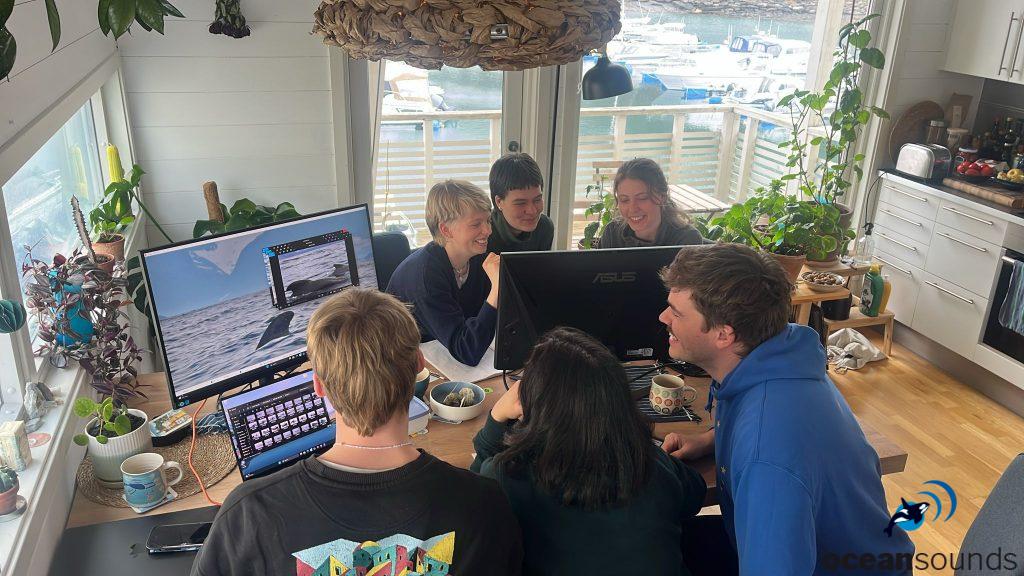
To support the continued growth of our growing photographic archive, Ocean Sounds is collaborating with data scientists Christopher Hauer and Elmar Noeth from FAU Erlangen-Nürnberg, Germany, and Delia Fano Yela from RISE, Sweden.
Together, we are developing an AI-based identification model designed to assist with processing our photo-ID archive and recognising individual animals. Automating parts of this time-intensive process will allow us to analyse our historical and future data more efficiently, strengthening the long-term monitoring and conservation work behind the project.
Understanding the Vocal & Social Behaviour of Whales & Dolphins
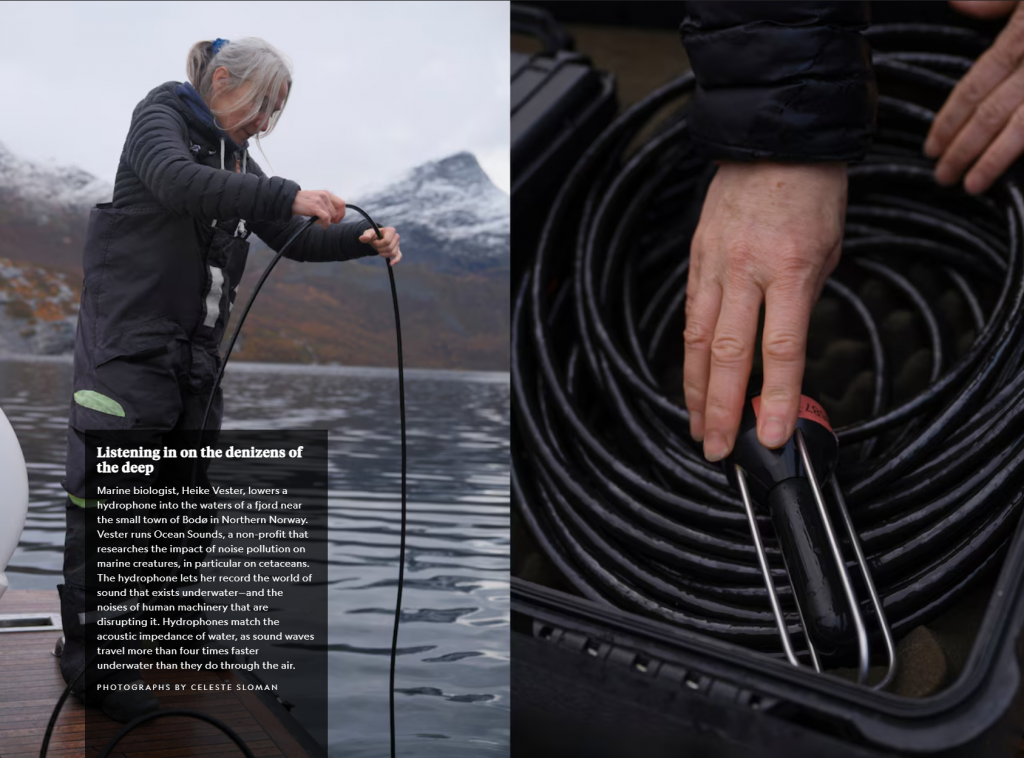
Since 2003, Ocean Sounds has studied the vocal and social behaviour of long-finned pilot whales, Atlantic white-sided dolphins, and killer whales. Through long-term observations and acoustic research, we aim to better understand the complex communication, social relationships, and behaviour of these highly intelligent animals and bring their underwater world closer to the public.
By sharing this knowledge through public and scientific channels, we hope to strengthen awareness of their complex social lives and support their protection from human pressures, including whaling, captivity, disturbance and harassment from whale-watching activities.
Sea of Sounds
Sea of Sounds was a collaboration project between Ocean Sounds, Seanergy and PartArt4OW that combined science, art and music in an educational way which was shared with pupils, students and the public through interactive workshops. The project focused on the soundscape of the marine environment and anthropogenic sound pollution.

Training the Next Generation of Marine Biologists
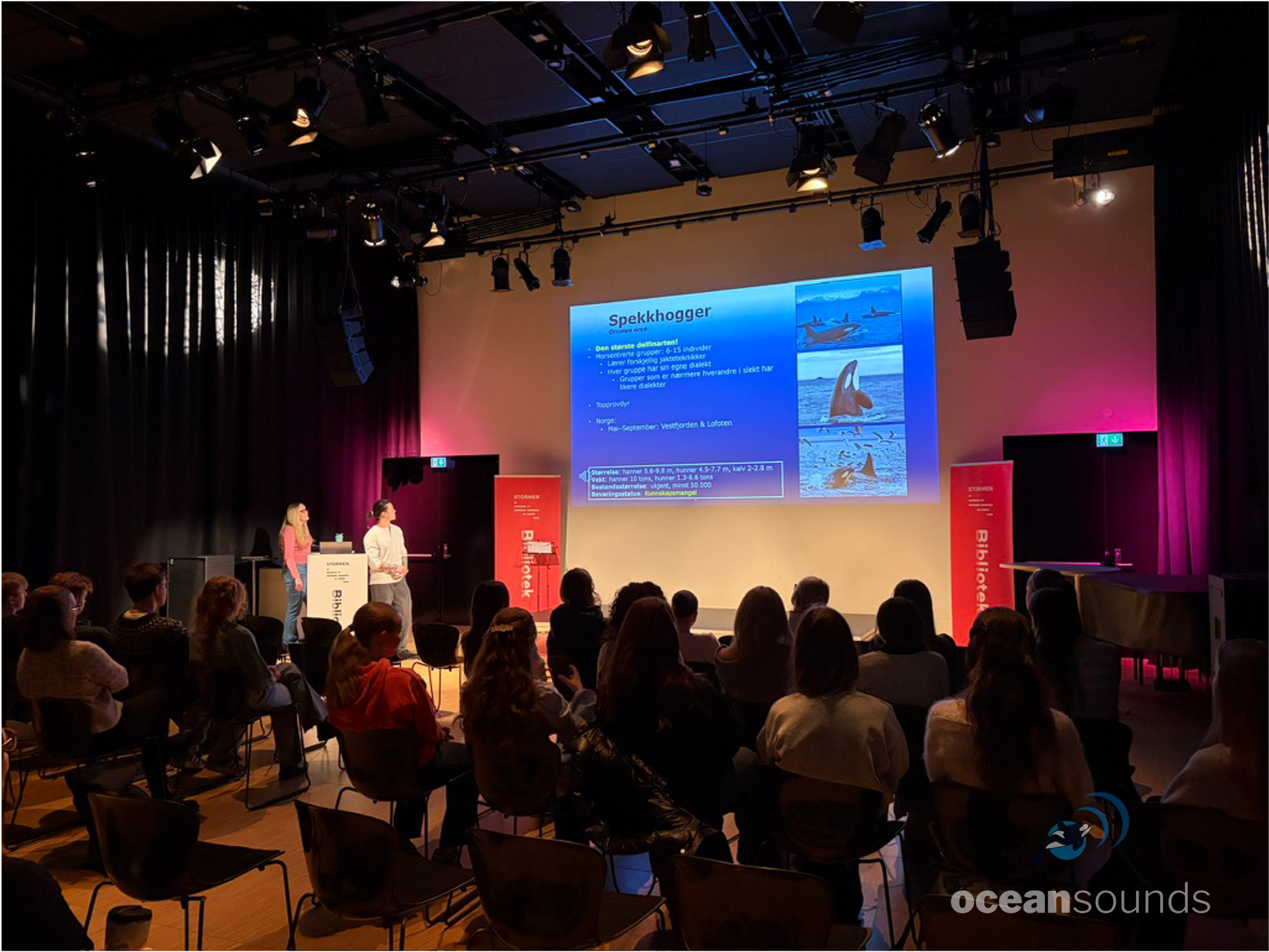
Since spring 2025, Ocean Sounds has contributed to the teaching of Marine Mammal Biology at Nord University in Bodø, combining theoretical knowledge with practical experience from the field.
Our teaching includes Marine Mammal Biology, which introduces students to the biology of marine mammals and basic methods of field-work and data analysis. As a follow-up we also offer internships to apply and deepen the gained theoretical knowledge in our ongoing research projects.
By bringing together research, fieldwork and education, we aim to pass on knowledge and practical skills while giving future marine scientists a deeper understanding of studying and protecting marine mammals in their natural environment.

Donations
for Ocean Sounds in Norway
Bank account: SWIFT/BIC for SpareBank 1 Nord-Norge SNOWNO22
IBAN-nummer NO36 1008 3730 1
or Vipps (Norge): 515623