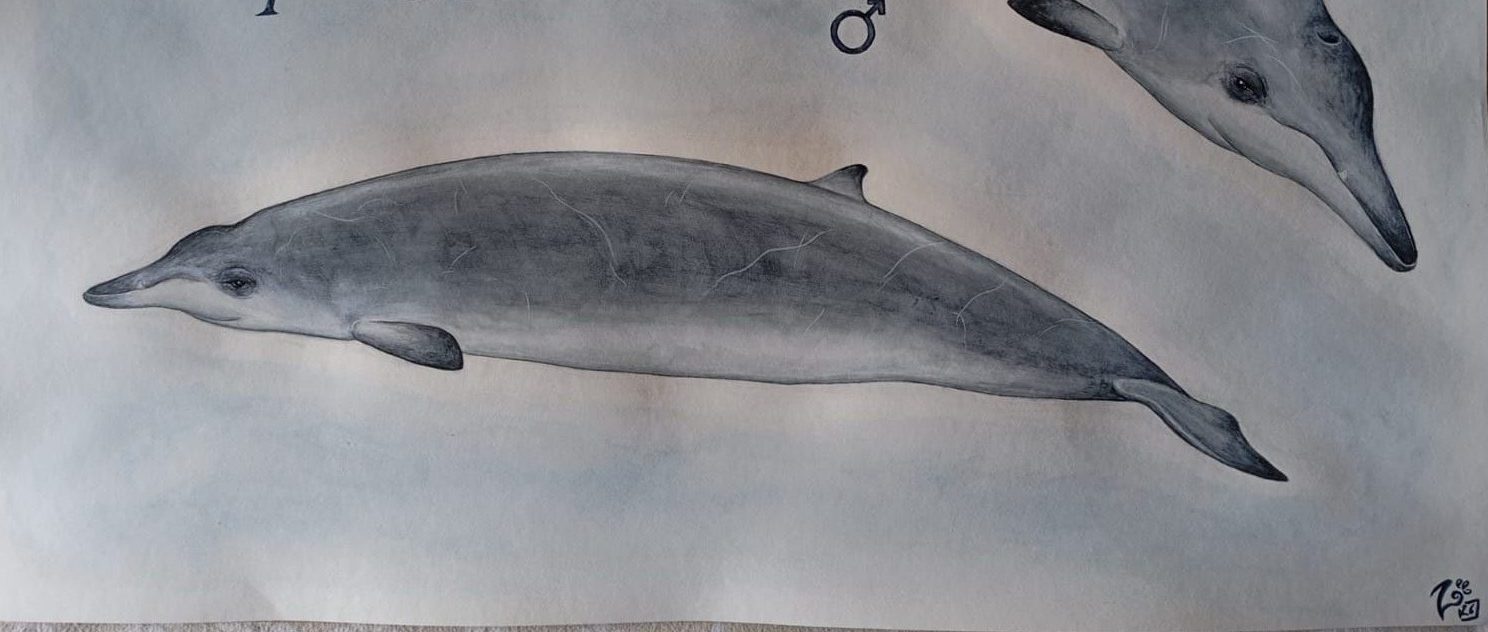
Sowerby’s Beaked Whale
(Norsk: Nordspisshval)
Mesoplodon bidens
Population : Unknown
Conservation Status : Data Deficient
Very rarely spotted. Sowerby’s beaked whales (Mesoplodon bidens) are found in the North Atlantic, with their distribution encompassing the Norwegian Sea and waters off the west coast of Norway.
They are considered the most northerly distributed Mesoplodon species in the Atlantic, typically preferring deep, cold, temperate, and subarctic offshore waters beyond the continental shelf edge, often at depths of 700 metres or more. Regular dives range from 10 to 15 minutes, but dives of at least 28 minutes and reaching depths down to 1500 meters have been recorded. While diving, they use suction to feed on small, deep-sea fish and cephalopods (e.g., squid) in deep waters. Despite their wide range, they are rarely observed alive at sea, which limits knowledge about their population size and behavior.
Historical records from the Skagerrak and adjacent waters, which border Norway, show 30 sightings of Sowerby’s beaked whales since 1869, with a notable 43% increase (13 records) between 2010 and 2021, predominantly from July to November. These deep-diving cetaceans often surface briefly, while often lifting its head up out of the water at a 45-degree angle. They are known to form small groups, rarely exceeding 10 individuals.
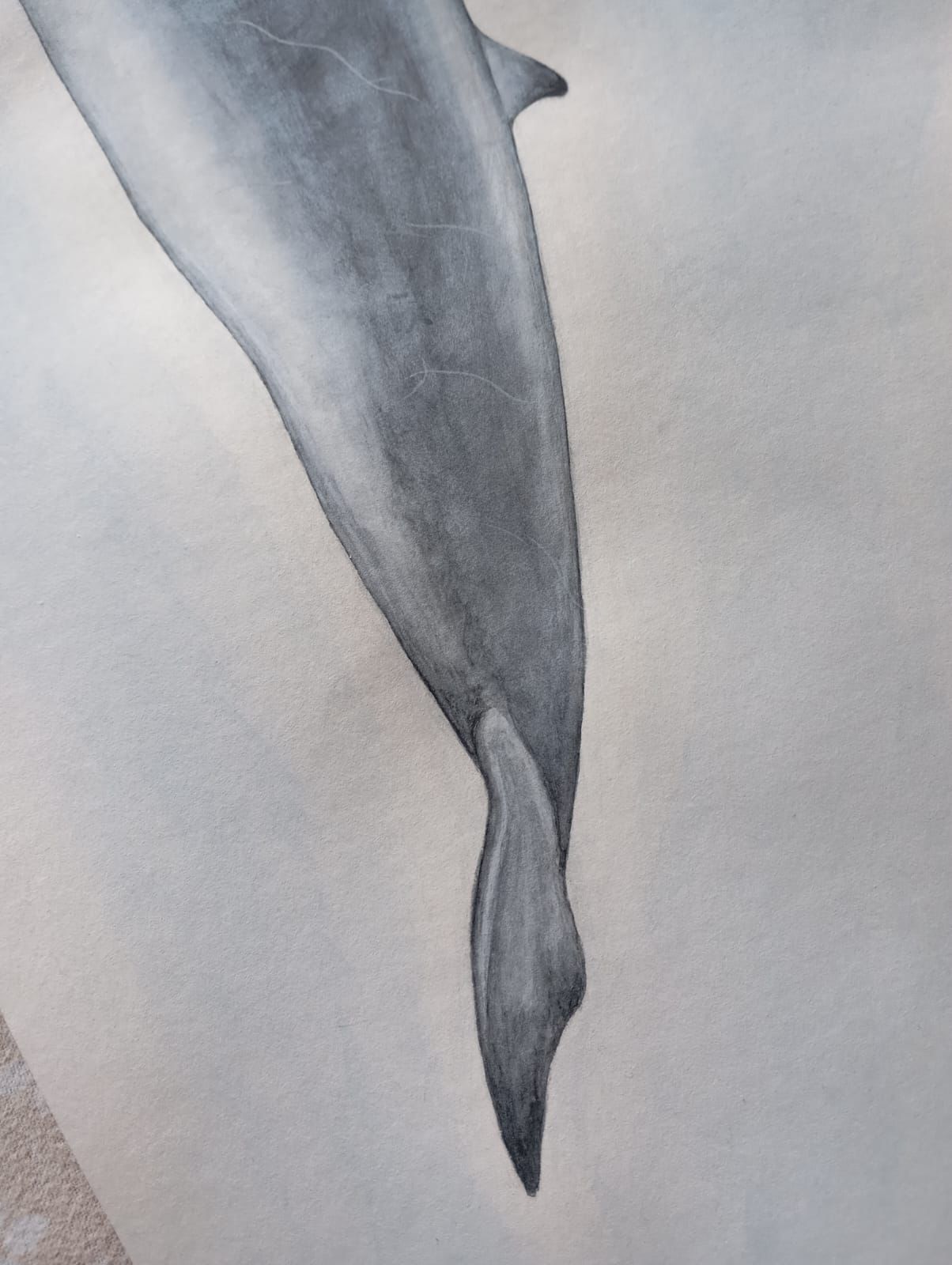
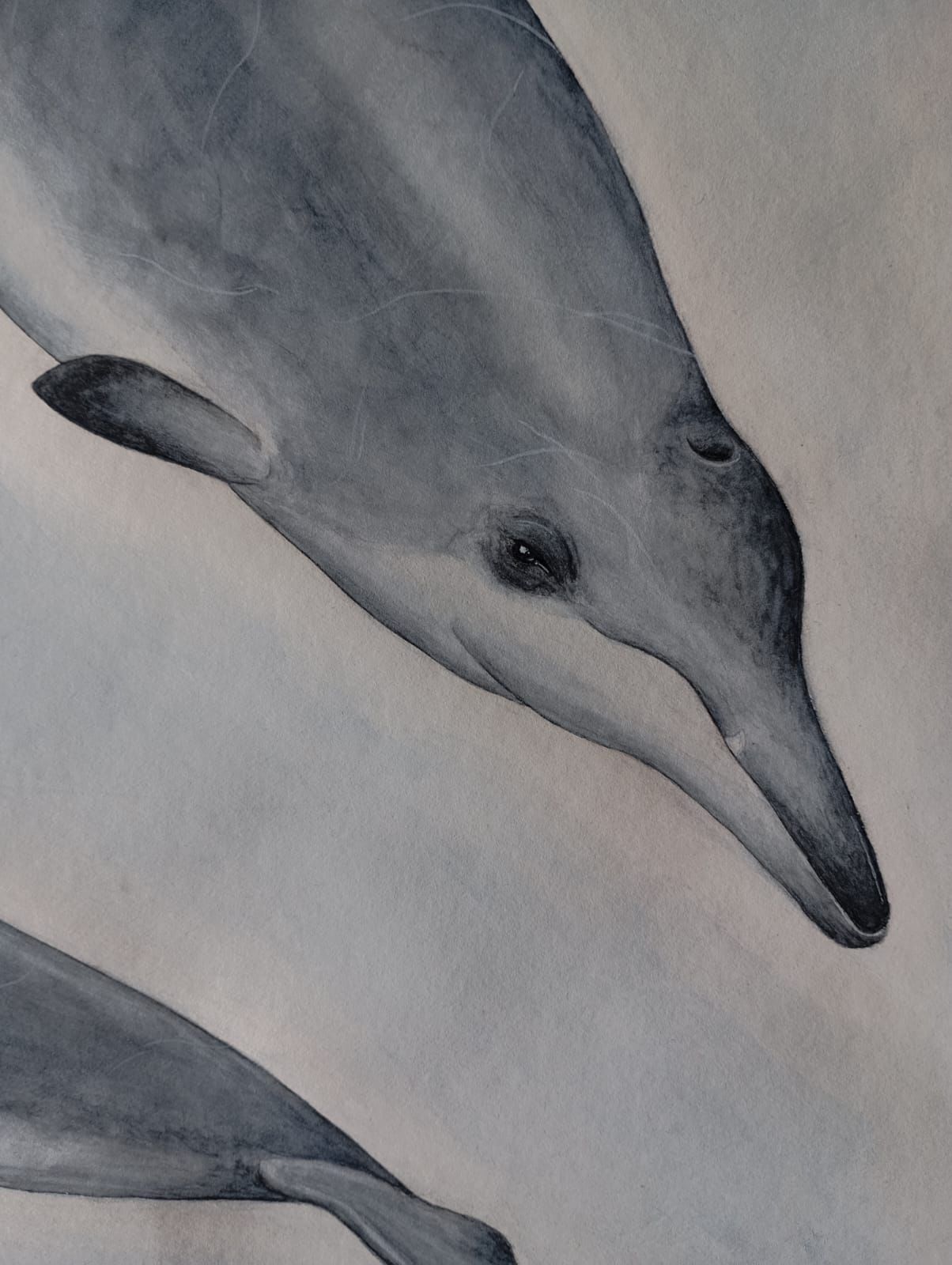
Identification: Characterized by a long, slender, dolphin-like beak and a spindle-shaped body, typically dark bluish-grey, with a distinctive sandy colouration on the head and beak. A prominent feature in adult males is the eruption of a pair of teeth midway along the beak. The underside of the whale is generally lighter, particularly in younger animals, and may exhibit grey or white spots. Their dorsal fin is small, curved, and ends in a rounded tip. Relative to other beaked whale species, their flippers are notably long and slender.
Other names: North Atlantic beaked whale, North Sea beaked whale
Group formation: 1-5 individuals. Sowerby’s beaked whale is fairly uncommon and typically forms small groups rarely exceeding 10 individuals.
Size: males 5.5 meters, females 5.1 meters, calf 2.4 meters
Weight: Adults 1300 kilograms, calf ca 170 kilograms
Spout: Often invisible and hard to see
Age: Unknown
Sexual maturity: Around 7 years, a mature female will give birth to a single newborn calf
Gestation: ca 12 months
Weaning: unknown
Diet: Primarily preying on a diverse range of mesopelagic and bathypelagic fish species, including species like Atlantic herring and cod, Hake and Lanternfish, with cephalopods (e.g. squid) constituting a comparatively minor dietary component.
Distribution: Exclusively distributed across the North Atlantic, inhabiting temperate and subpolar oceanic waters. Their known range extends from the Canary Islands northwards to Iceland and the Norwegian Sea in the eastern Atlantic, and from New York north to Newfoundland and Labrador in the western Atlantic. The species primarily occupies deep waters (max 1386 m) over and seaward of the continental shelf edge. Although strandings have been documented in shallower areas like the North Sea, English Channel, and Baltic Sea, these habitats are not considered part of their core distribution.
Population size: In Europe, 1266 mature individuals (estimated), Central Florida to lower Bay of Fundy, 492 (2021)
Conservation Status: Least Concern (2023), Risk Act and Special Concern (in Canada), Pop. trend: Unknown
Vocalizations: The acoustic characteristics are widely unknown, however, several echolocation clicks and seven burst pulses were recorded during an encounter off the eastern seaboard of the United States, but no tonal sounds were detected. Median peak frequencies ranged from 25-67 kHz with the majority being 33kHz.
Bycatch, vessel strikes, and entanglement, with a significant concern being gas embolism often linked to military sonar, which can induce decompression-like illness. Also vulnerable to plastic ingestion, chemical contamination, and potential disturbance from oil and gas exploration activities.
The acoustic characteristics are widely unknown, however, several echolocation clicks and seven burst pulses were recorded during an encounter off the eastern seaboard of the United States, but no tonal sounds were detected. Median peak frequencies ranged from 25-67 kHz with the majority being 33kHz.
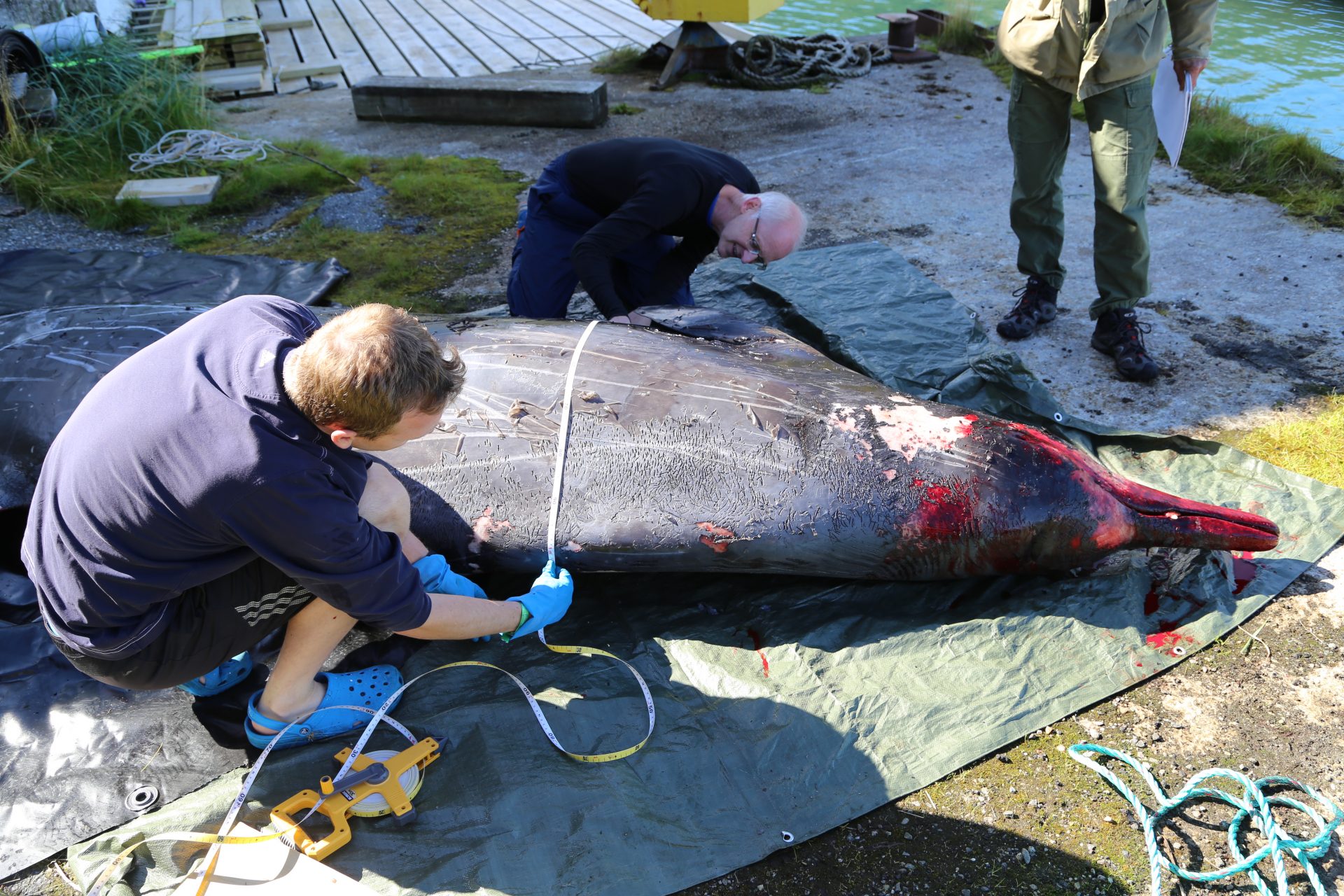
Stranding of a Sowerby’s beaked whale (Mesoplodon bidens) in Ravika, Sandhornøya, near Bodø, Norway, August 2016
The skeleton from this whale is on exhibition in Stormen Library, Bodø between the 9-15th of Feb 2026!!
It began with a message from the coast, a small whale lay dead in Ravika, a shallow bay on Sandhornøya, just south of Bodø. At first glance, it seemed like a familiar story. But when a photograph followed, it became clear that this was something far more unusual.
What had stranded was not a dolphin, but a Sowerby’s beaked whale (Mesoplodon bidens), a rare deep-diving species that lives far offshore, seldom seen alive and little understood. The narrow jaw and the presence of two small teeth confirmed it: a young male, roughly 4.8 meters long, not yet fully mature.
Locals told us they had seen him alive in Ravika days earlier. He had remained within the bay, surfacing slowly and circling near the shore, showing signs of disorientation and respiratory distress (difficulty breathing and abnormal breathing behaviour). Then, he died, found still and silent in the same shallow waters.
A dissection showed no signs of injury or disease. His organs, muscles, and blubber were in good condition. His stomach contained 120 fish otoliths (fish ear bones), mostly from the Gadiculus (cod fish) and Trisopterus (pout fish) genera. This shows that the whale had been actively feeding and was not starving, and no plastic or other foreign material was found in his stomach or intestines. No clear cause of death was determined.
That summer, seismic survey vessels were active in nearby waters. These ships use powerful airgun blasts to map the seafloor, pulses that can be heard for vast distances underwater, sometimes hundreds of kilometers away. For deep-diving whales, the intensity of this sound can cause panic, disorientation, or internal injury.
Beaked whales are among the species most sensitive to underwater noise. Sound is essential to their survival; used for navigation, communication, and finding food in the dark depths of the ocean. When human-made noise fills that environment, it can interfere with these vital processes, turning the ocean into a hazardous place for animals that rely on sound to live.
Ocean noise pollution is an increasing global concern. Unlike visible threats, sound travels far and leaves no trace, yet its effects can be profound. This whale’s story reminds us that activities far offshore can have consequences close to land, and that the impact of noise may surface only when it is already too late.
This stranding may be the northernmost recorded for the species, and it underscores how much we still have to learn about deep-diving whales and the soundscape they inhabit.
Sadly, many strandings in Norway go undocumented. If you encounter a stranded or dead whale, report it to Ocean Sounds right away. Every report helps us to understand the health and condition of our whales in these waters.
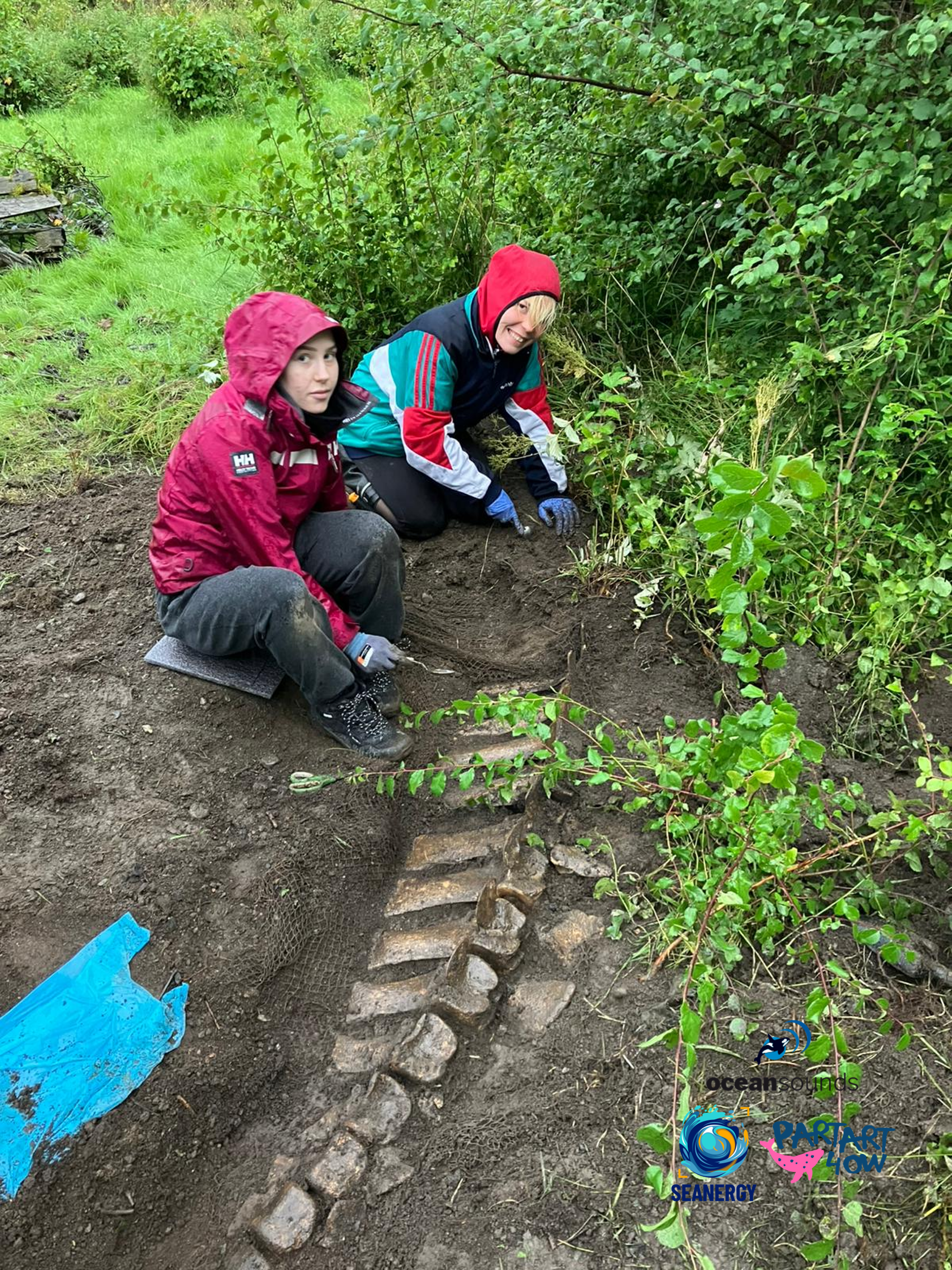
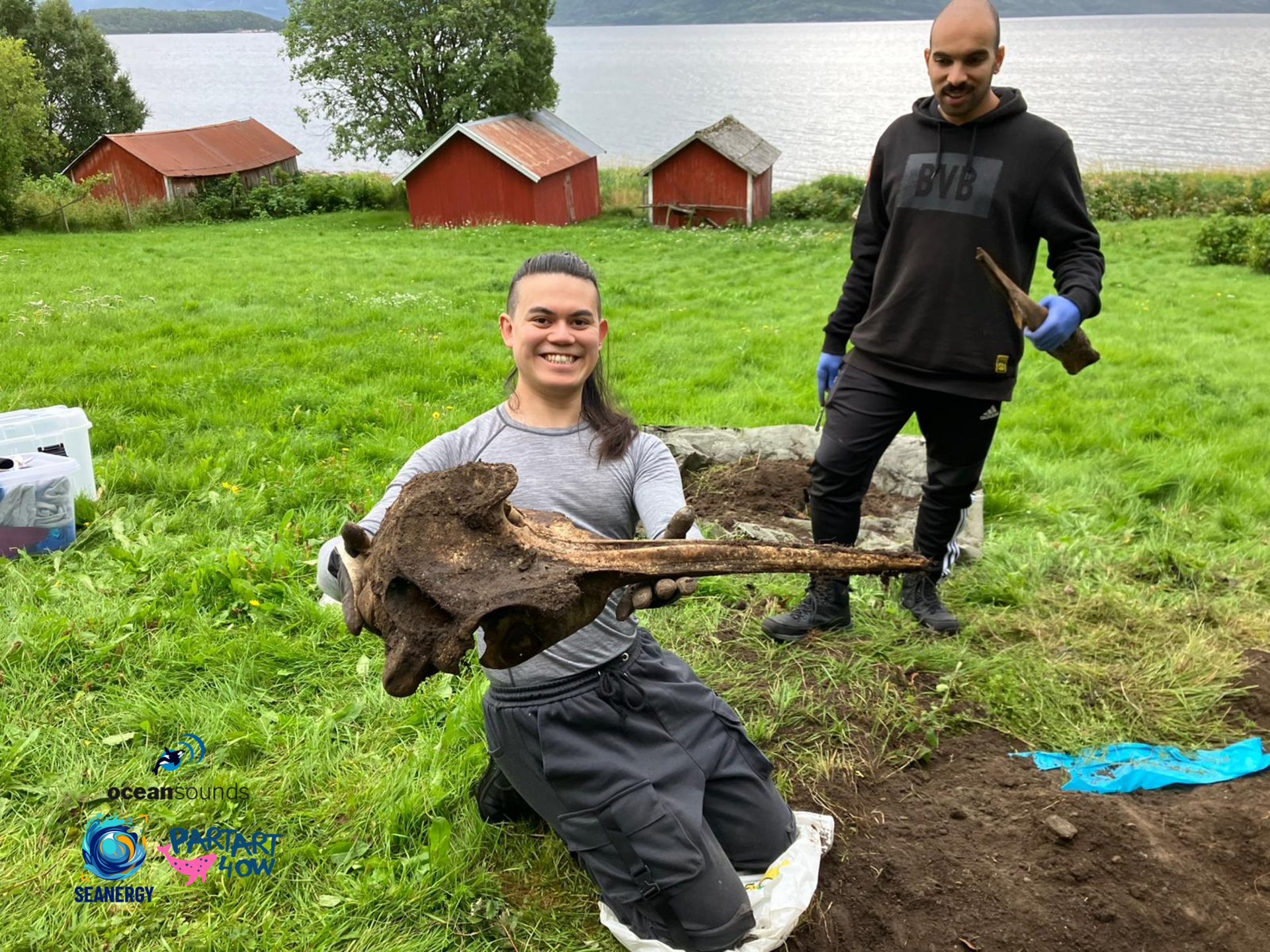
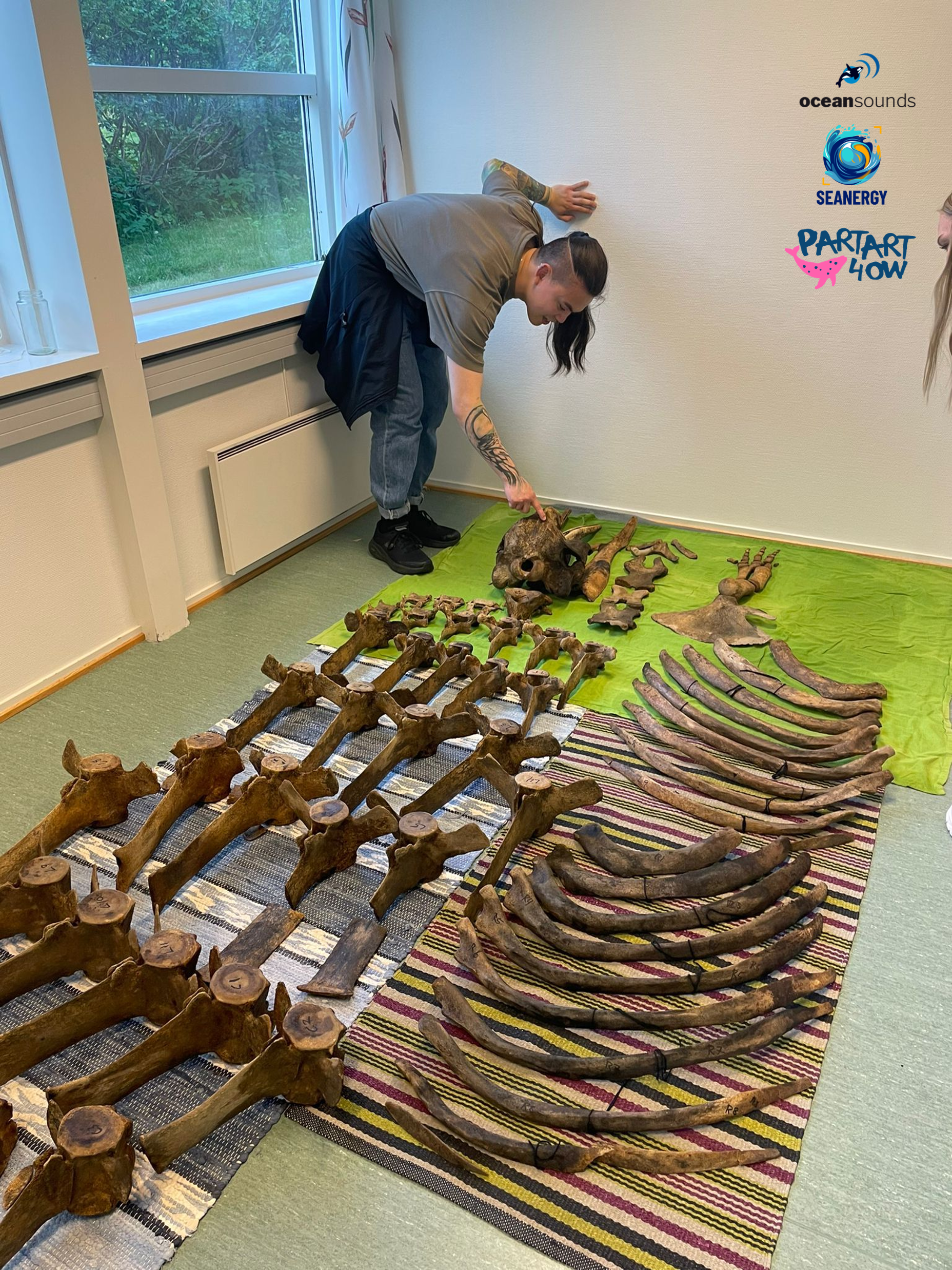
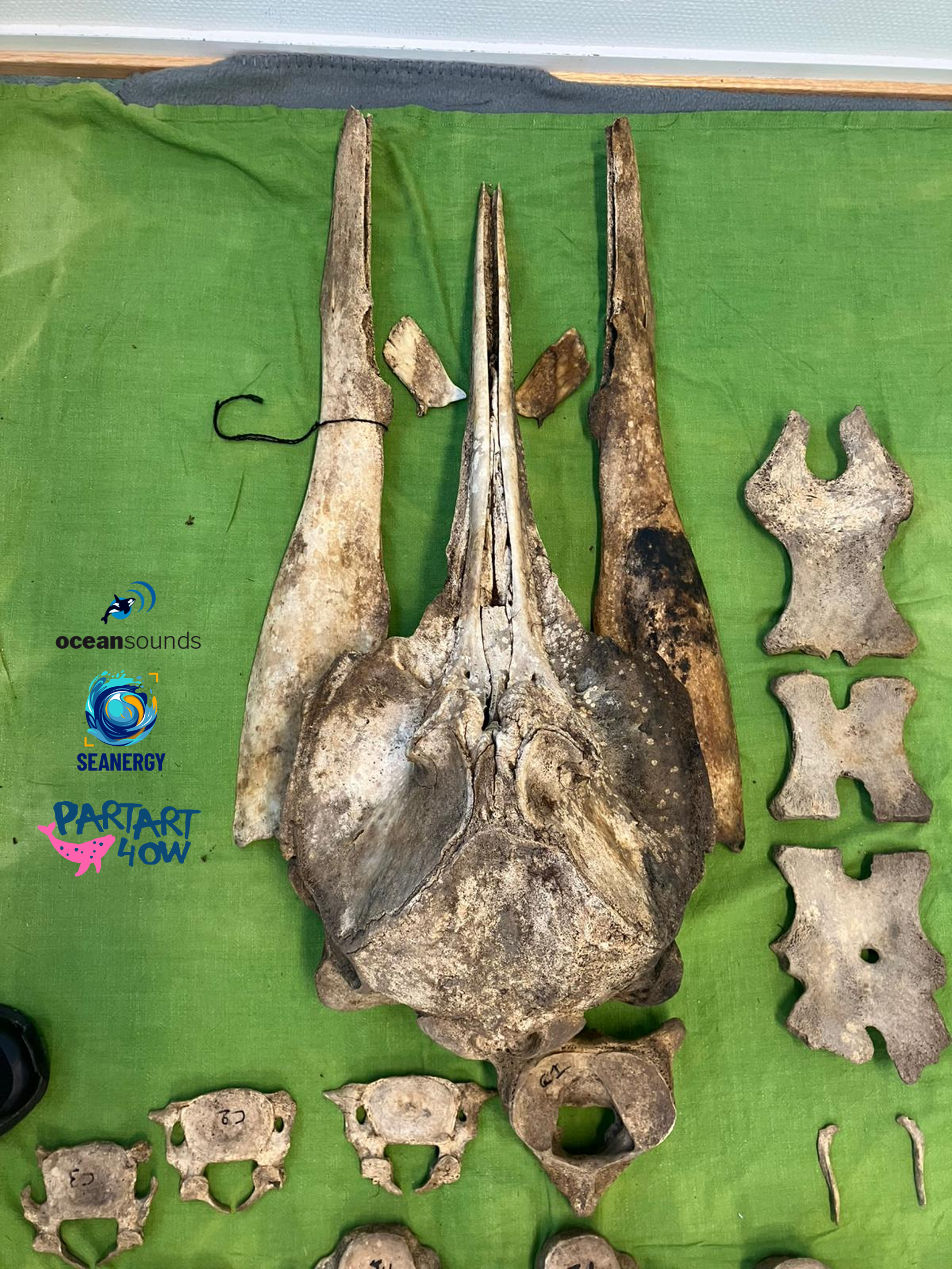
The Sowerby’s whale was buried after the dissection for 8 years, it takes time for the decomposition and the bones to be freed from other biological connecting materials. Digging up the bones was an exciting time to find all of the pieces from the large skull to the small bones in the pectoral fins and counting and aligning the bones into a skeleton.
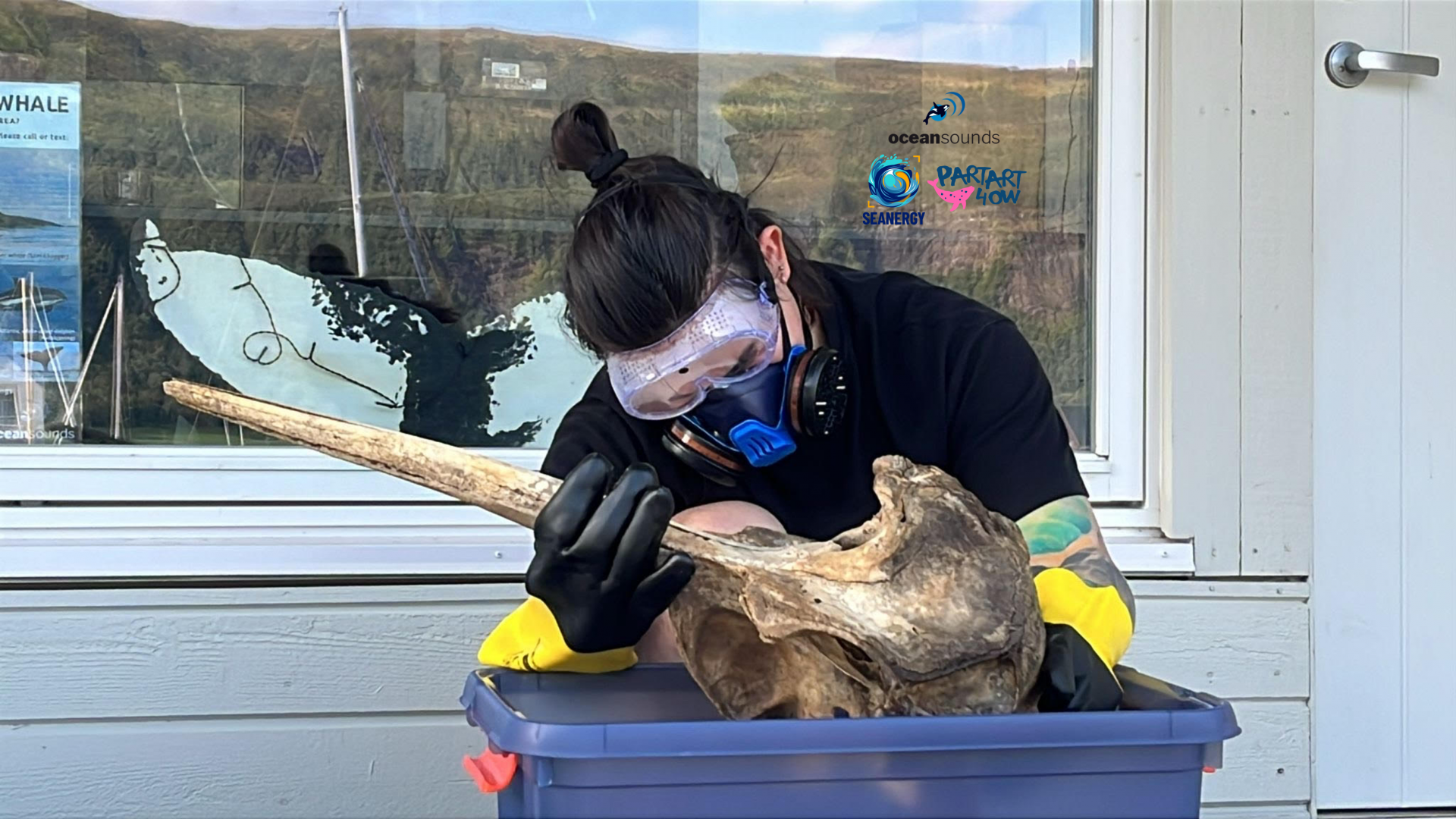
The next step was cleaning the bones, due to the fragility of the bones and some frostbite, the bones weren’t whitened and remain in their natural color. Next the bones were preserved using epoxy and assembled upon foam.
A large wooden custom display case was crafted to display this rare whale for the Sea of Sound project, Whale Exhibition at Stormen Library in February of 2026. The display case is 4.8 x 1 meters to hold the Sowerby’s skeleton under plexiglass for the public and later Nord University to experience.
Today, these bones tell a larger story; one of how human activity is shaping the marine environment, and how whales are affected by the noise we add to the ocean. By working together to reduce ocean noise pollution, we can help protect whales and the underwater world they depend on.
Content warning: Contains footage of an injured animal.
Unfortunately we don’t have any photos of a living Sowerby’s beaked whale, the picture below is from the stranding in Ravika, Sandhornøya, Norway 2016 and excavation in 2024. Drawings are made by Zephyr : Redbubble / Instagram