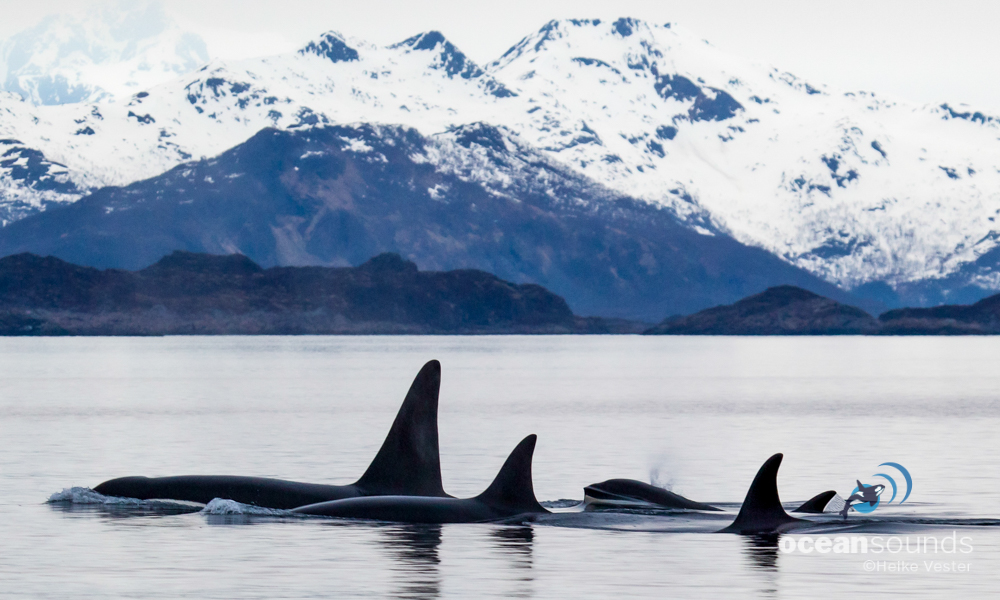
Killer Whale, Orca
(Norsk: Spekkhogger)
Orcinus orca
Population : Unknown
Conservation Status : Dada Deficient
Seen in Vestfjorden and Lofoten from May-September where they typically feed on salmon, herring, mackerel and some marine mammals. During the winter they migrate north following the herring migration, usually in the Skjerøy area of northern Norway in more recent times.
Part of the Norwegian spring-spawning herring (ca 3,5 Million tons) migrates every year closer to the coast of northern Norway to spend the winter. In January-February they travel further south to their spawning grounds along the Norwegian coast. They spend the rest of the year in the open sea and return to northern Norwegian coast the following fall. Killer whales feed on this herring stock and follow them all year round, some pods spend the summer months inside fjords and feed on salmon, local herring, mackerel and marine mammals. The seasonal migration pattern of herring is known to go through major changes. The wintering grounds were in offshore waters in the Norwegian Sea until the late 1960’s. Following a collapse in the herring stock due to over fishing, the wintering grounds moved into the fjord system in northern Norway. Currently the wintering grounds are in Tromsoe, Senja and Andfjorden from the end of October until March. Large amounts of killer whales, humpback whales and fin whales aggregate during this time in those fjords.
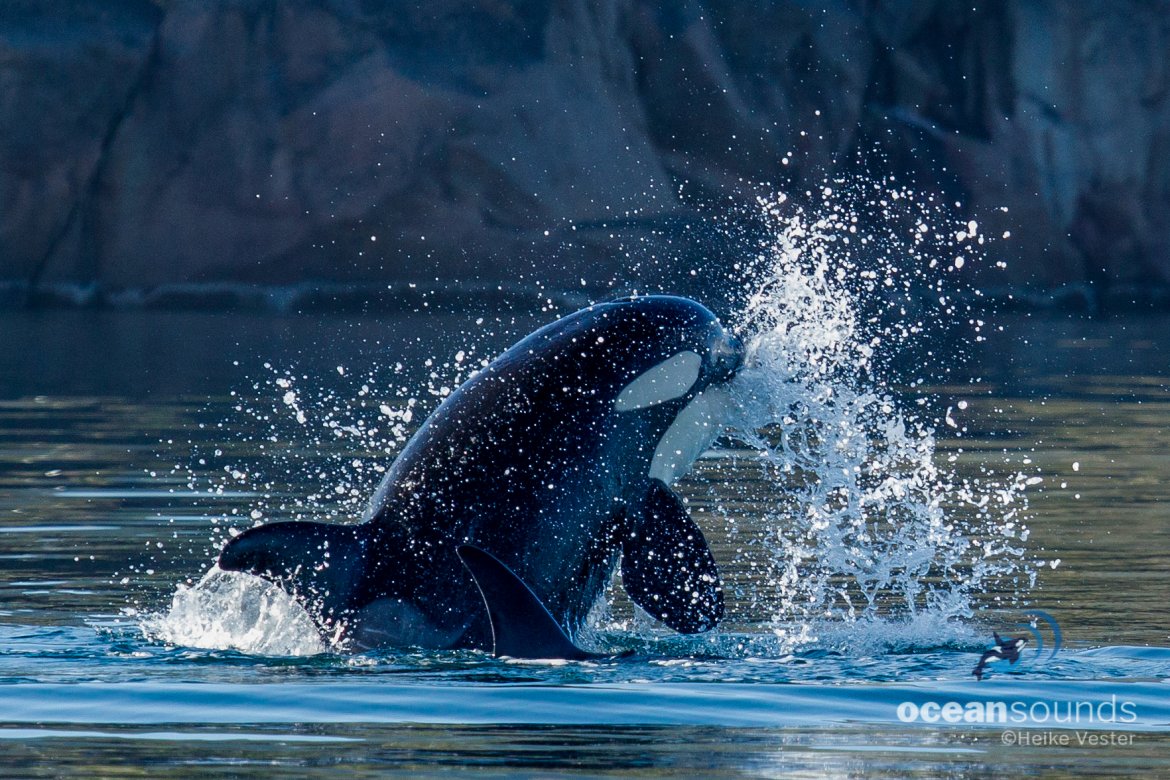
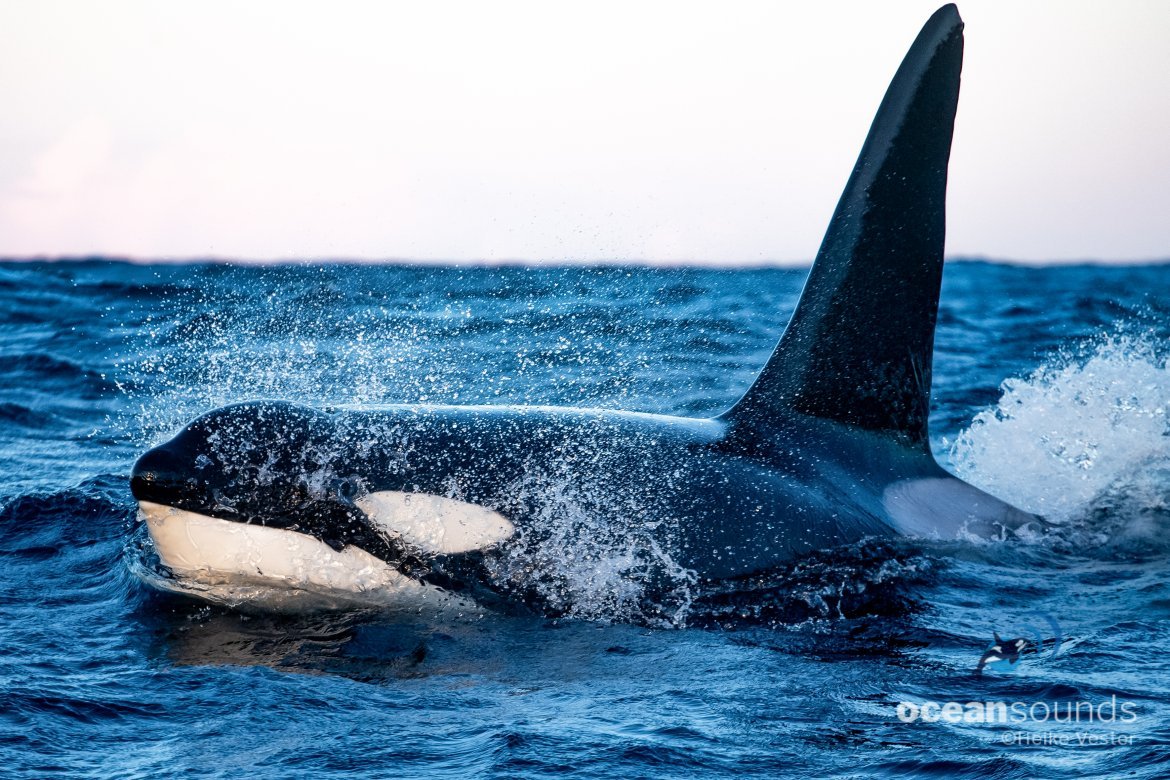
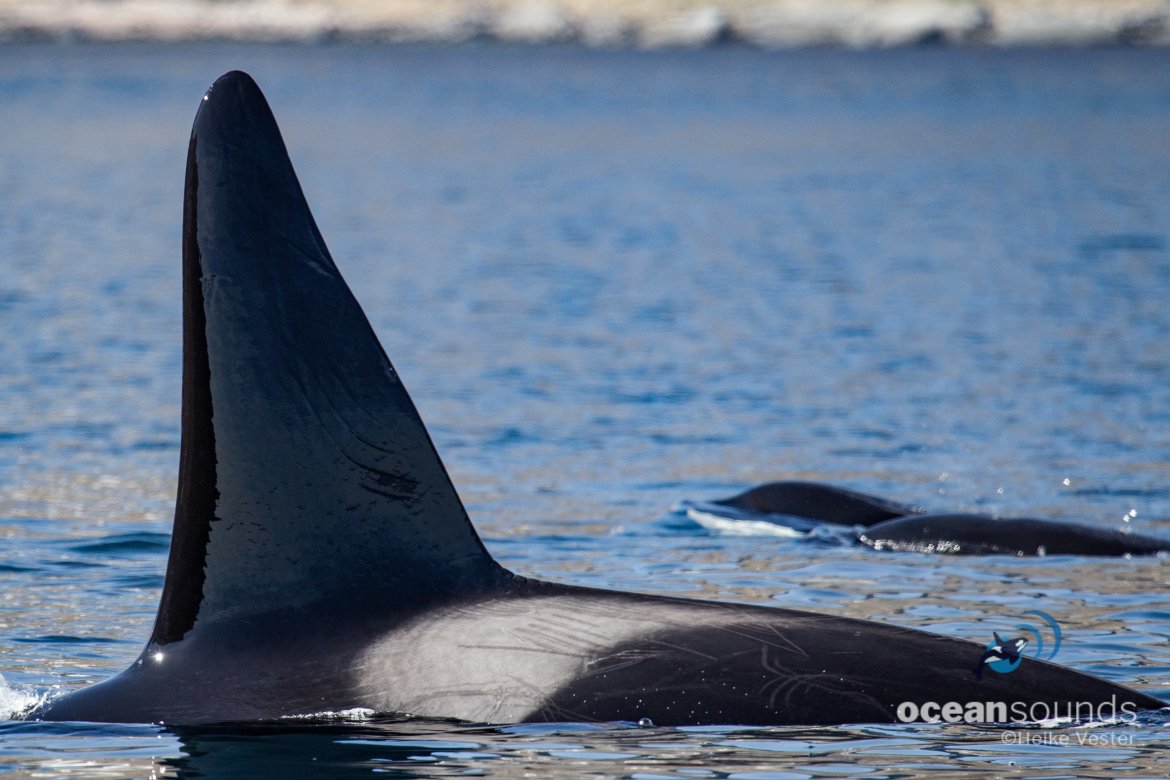
Identification: Toothed whale, Black and white in color, large distinct dorsal fins (can be 2 meters tall for males), white eye patch, grey/white color saddle patch, black and white curved fluke
Group formation: Matrilineal groups (6-15)
Size: males 5.6 – 9.8 m, females 4.5-7.7 m, calf 2-2.8 m
Weight: Male 10 tons, female 1.3 – 6.6 tons, calf 120-180 kg
Age: Females 80 – 100+ years; males 50-60 years
Sexual maturity: males 15-21 years, females 11-16 years
Gestation: 15-18 months, 3-8 years in between births
Weaning: 1-3 years
Birth: Can happen all year, with a peak in late fall/early winter. A female gives birth to 4-6 calves over a period of 25 years until ca. 40 yrs old. After reproduction, females live for another 20 or more years, meaning they have a significant post-reproductive lifespan, probably to take care of their offspring and group. Newborn killer whales are 1.8–2.2 m long and weigh ca. 180 kg. The mother nurses her young for more than 1 year.
Group formation: Killer whales have very strong social bonds. The young of both sexes stay with their mother and live in small family groups together throughout their lives. This way the males in a group are not necessarily the fathers of the young but the brothers, cousins or uncles.
Smallest group consists of 6-15 animals, a matrifocal group, which consist of a mother and her offspring (both gender).
Clan: Matrifocal groups with similar vocal dialects and members that are related to each other.
Community: Several groups that have been observed together at least once. Members of different communities seem not to travel with each other and do not interbreed (e.g. southern and northern resident whales in British Columbia, Canada).
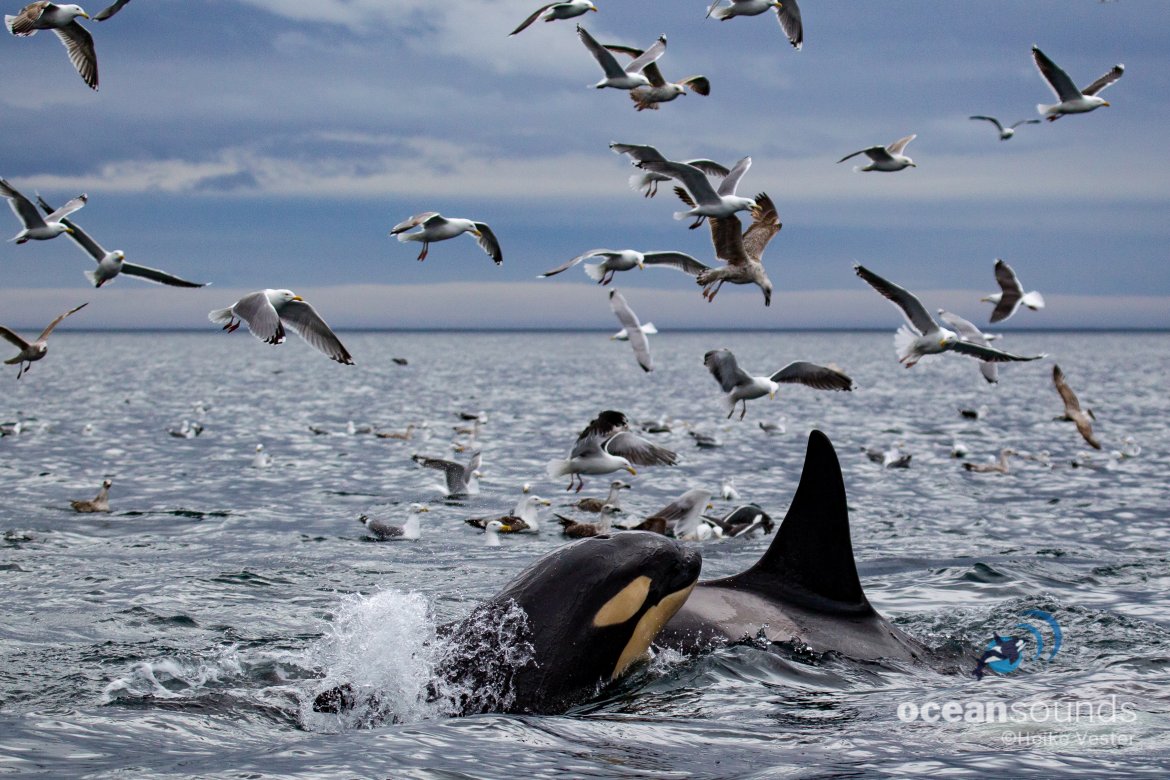
Diet: variety of prey (from fish to marine mammals). In Norway, killer whales feed mostly on herring, salmon, mackerel, birds, and seals and sometimes harbor porpoises.
Distribution: worldwide, largest populations in cold temperature to polar coastal waters.
Population size: unknown, min. 50 000
Conservation Status: Data Deficient ver 3.1, Pop. trend: unknown
Travelling:
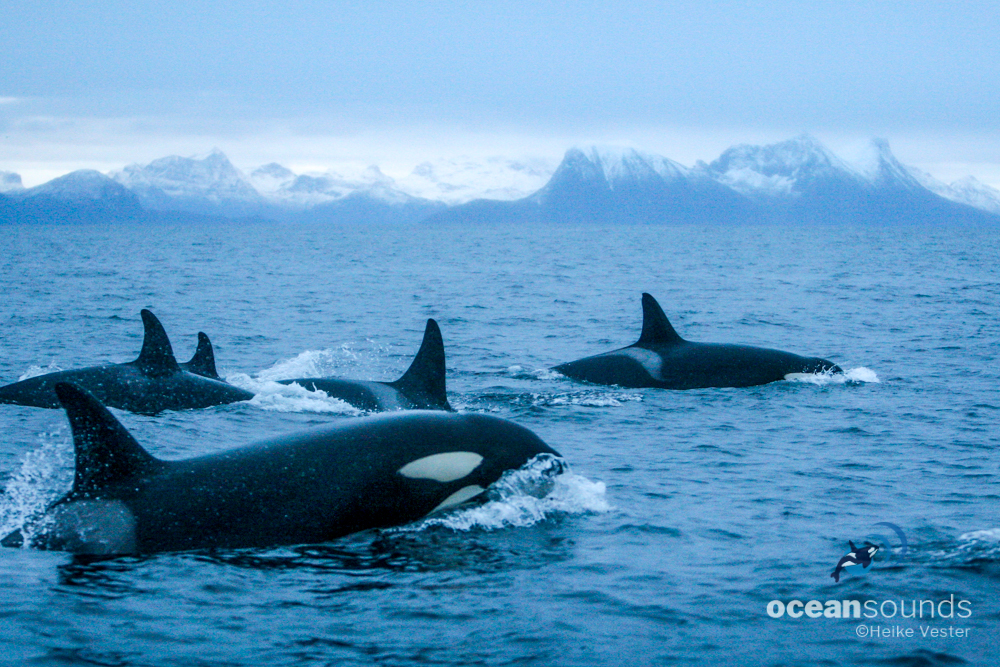
Whales moving with all animals in the group facing the same direction, either in a line or in groups.
Feeding:
Killer whales have a variety of prey (from fish to marine mammals) and seem to specialize if nutritious prey is available. In Norway, killer whales feed mostly on herring, but they also feed on salmon, mackerel, birds and seals.
However, there are different reported strategies to capture herring:
- Carousel feeding: Whales herd herring into tight ball close to surface and stun them with tail slaps. Fish jumping and scales, pieces of fish and stunned herring can be observed on the surface.
- Subsurface feeding: whales swim back and forth in a limited area, activity of animals on surface, such as porpoising and tail slaps (also in mackerel feeding).
- Travel feeding: During traveling in a line in loose formations, they stop occasionally to feed individually.
- Seine fishing feeding: Killer whales also follow fishing boats seining for herring and feed on the discarded fish of these operations. This behavior occurred and increased during the last years, due to an increase in herring catch quotas and fishing vessels.
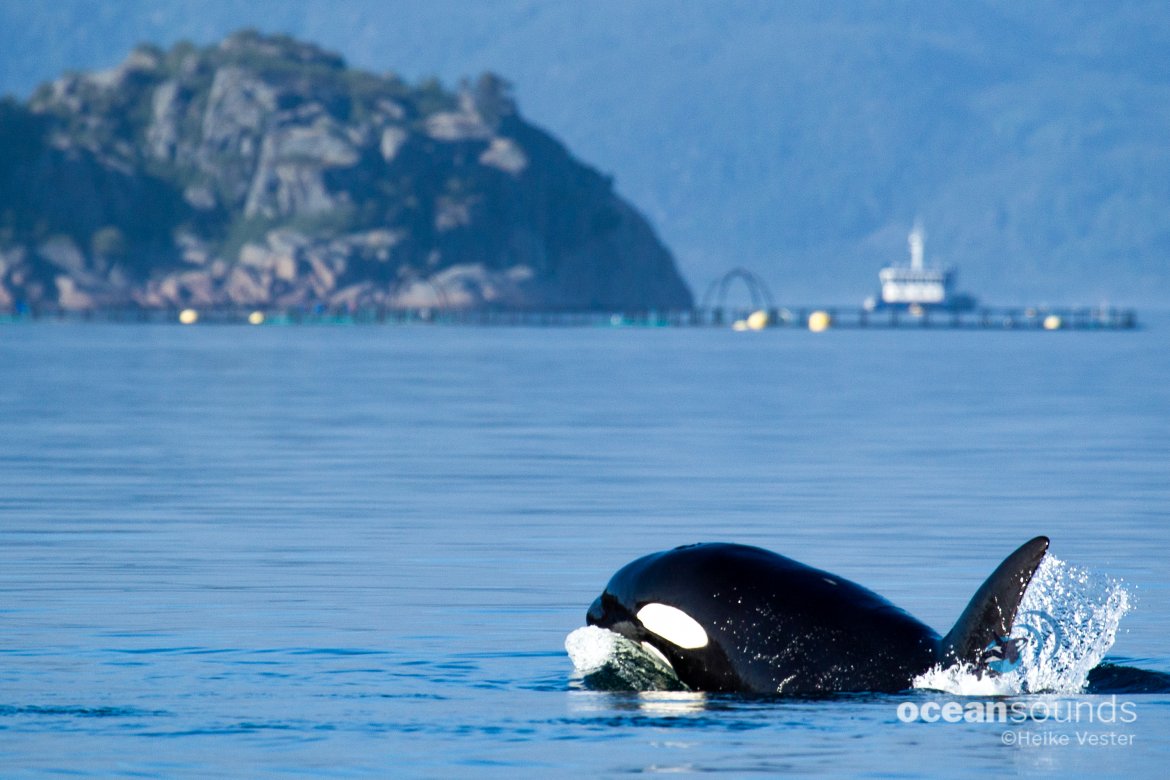
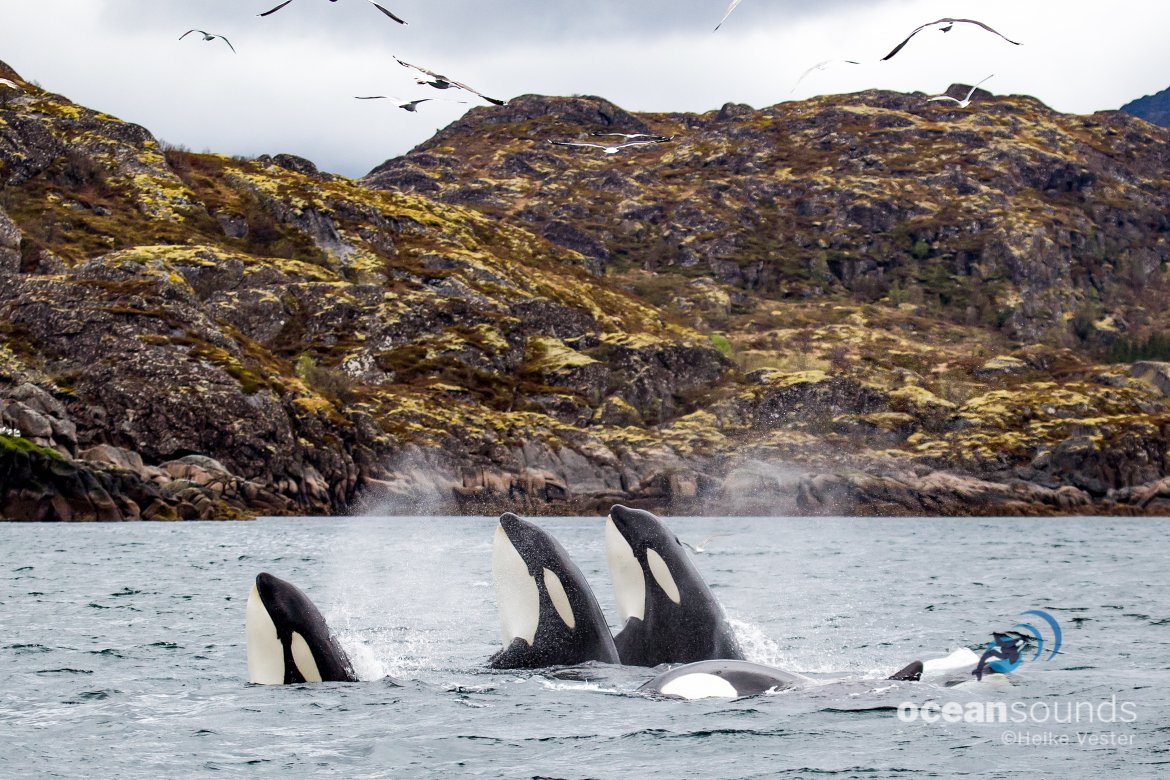
- Salmon feeding: groups scans a fjord by echolocation in loose formation, catches happen individually or in small groups, breaches to kill the salmon from above are common.
Socializing (they are always social!):
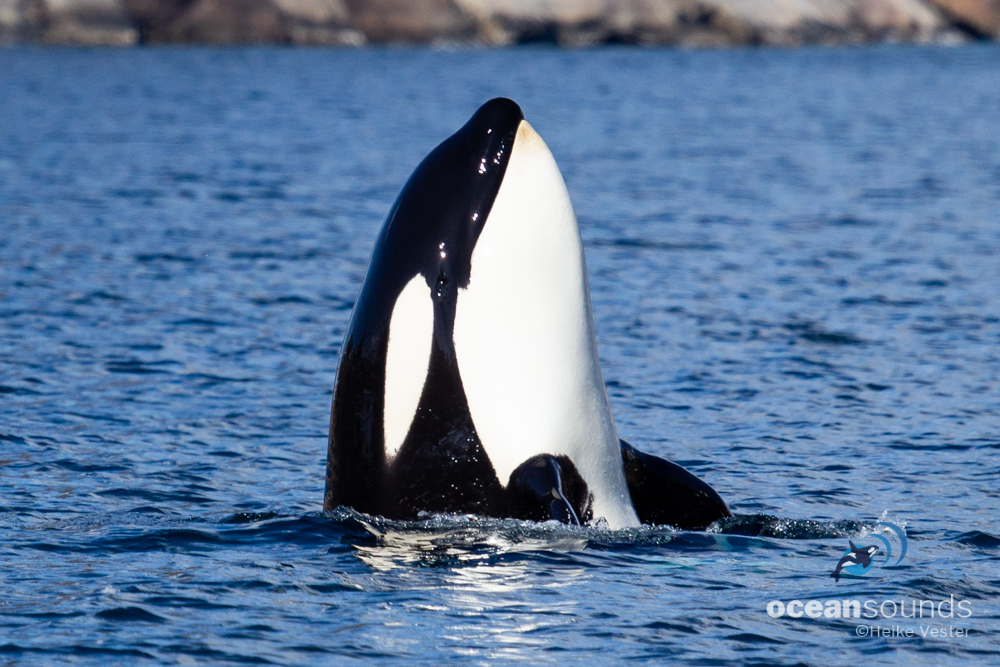
Whales are engaged in variety of physical interactions and aerial behaviors such as breaching, spy hopping, headstands, lob tailing and flipper slaps. Rolling around, chasing each other, and sexual behaviour, distance between individuals within one body length or direct body contact.
Resting:
Whales float motionless at the surface for a few minutes, or swim slowly in tight groups, diving and surfacing in a regular pattern. Resting whales should be left alone.
Communication:
Killer Whales depend on vocal communication for social interactions, navigation and food location, and therefore produce a variety of sounds: Clicks are predominantly used for echolocation
Whistles occur when whales are in close proximity to each other and stereotyped whistles may be important for close range coordination and maintaining interactions. Calls are used for both close and distant range communication. Calls are stereotypical pulsed sounds that are often characterized by two independently modulated frequency components: a low frequency component (LFC) that has most of its sound energy below 10 kHz, and an upper-frequency component (UFC), which consists of a fundamental frequency ranging from 2 to 12 kHz with sidebands ranging to 100 kHz.
They also produce buzzes and squeaks in the mid frequency range, which often accompany calls.
For a detailed description you can read Heike’s PhD thesis:
“Vocal repertoire of two matrilineal social whale species:
Long-finned Pilot whales (Globicephala melas) and Killer whales (Orcinus orca) in northern Norway”, Heike Vester
2017 University of Goettingen, Germany
People working on this topic:
Heike Vester, Ocean Sounds
Madita Zetzsche, Ocean Sounds
Cooperation: Dr. Filipa Samarra, Icelandic Orcas
Plastic and chemical pollution, man-made noise impacts, entanglement in fishing gear, overfishing, captivity, boat strikes.
Below you can hear the sounds made by a pod of killer whales while feeding!