Atlantic white-sided dolphin
(Norsk: Kvitkjeving)
Lagenorhynchus acutus
Population (North Atlantic) : 150,000 – 300,000
Conservation Status : Least Concern
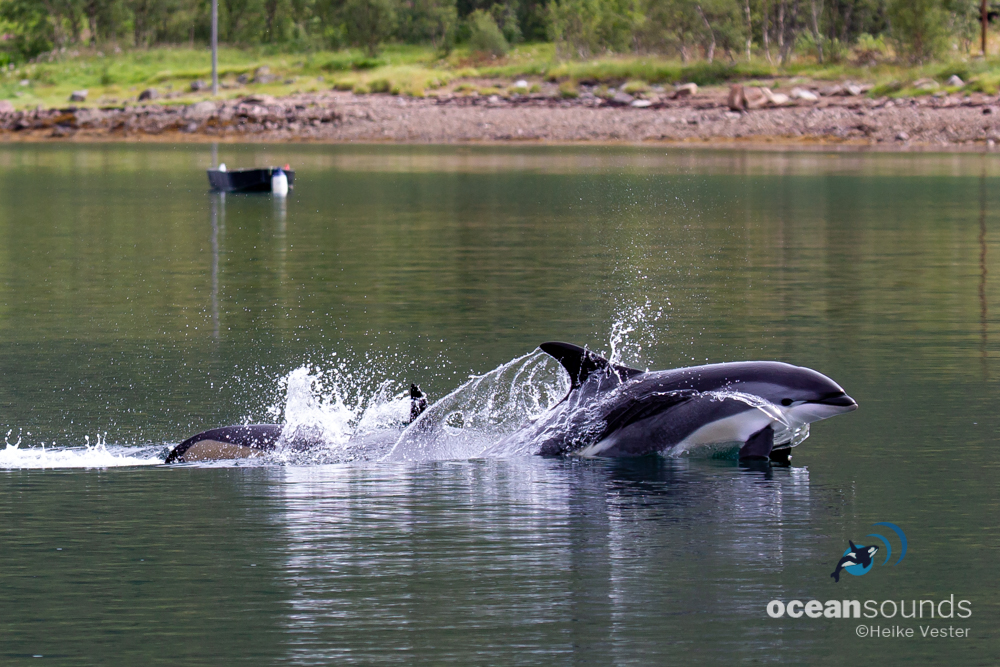
Seen along the Norwegian coast mostly in the north, does not overlap with Atlantic white-beaked dolphins, regular visitors to the Vestfjord, especially during June-September (along with the mackerel), and are often seen with pilot whales.
Atlantic white sided dolphins (Lagenrhynchus acutus), in Norwegian known as “kvitkjeving”, are regular guests in the Vestfjord and Lofoten, reaching Vesteraalen and the main land. We have been observing their migration and distribution as well as feeding and social behavior since 2006, which also includes taking and collecting pictures for Photo-ID and recording their sounds for vocal repertoire studies.
Basically nothing is known about this species in northern Norway and we are the first to investigate their biology in this area.
We have finished a baseline study, which contains distribution maps and Photo-identification catalog with re-sightings of individuals to find out whether we have a resident population in this area. In addition we will create a vocal repertoire catalog and describe their different sounds, before going into more detailed analysis of stereo-typed whistles and calls.
It is difficult to find the dolphins and we depend on the help of others to send us reports and pictures in order to cover the complete population. We ask you therefore to help us, if you see dolphins please tell us and share your pictures or videos with us!
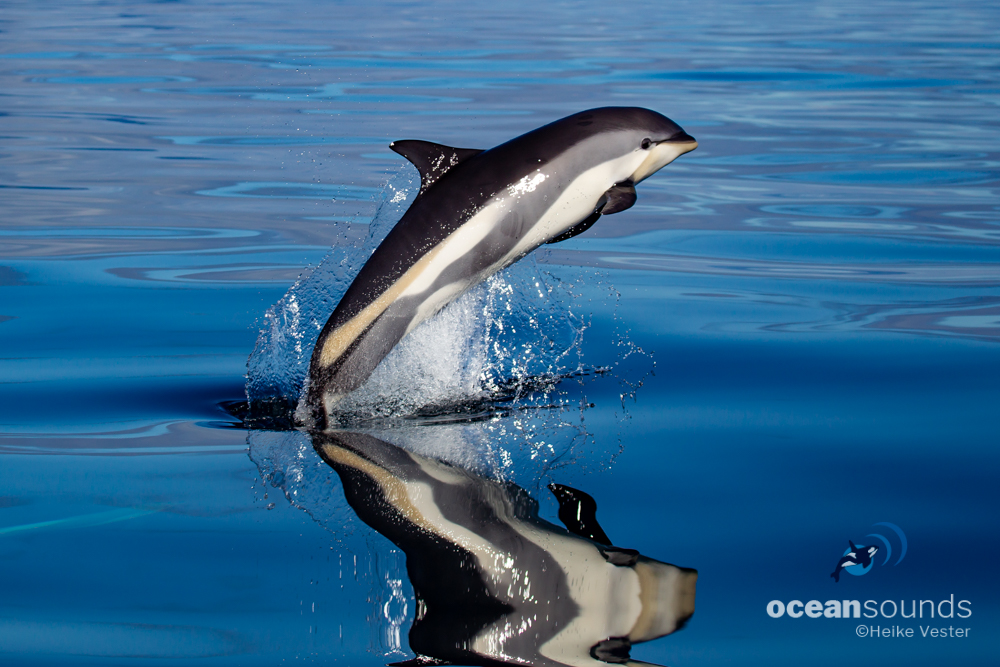
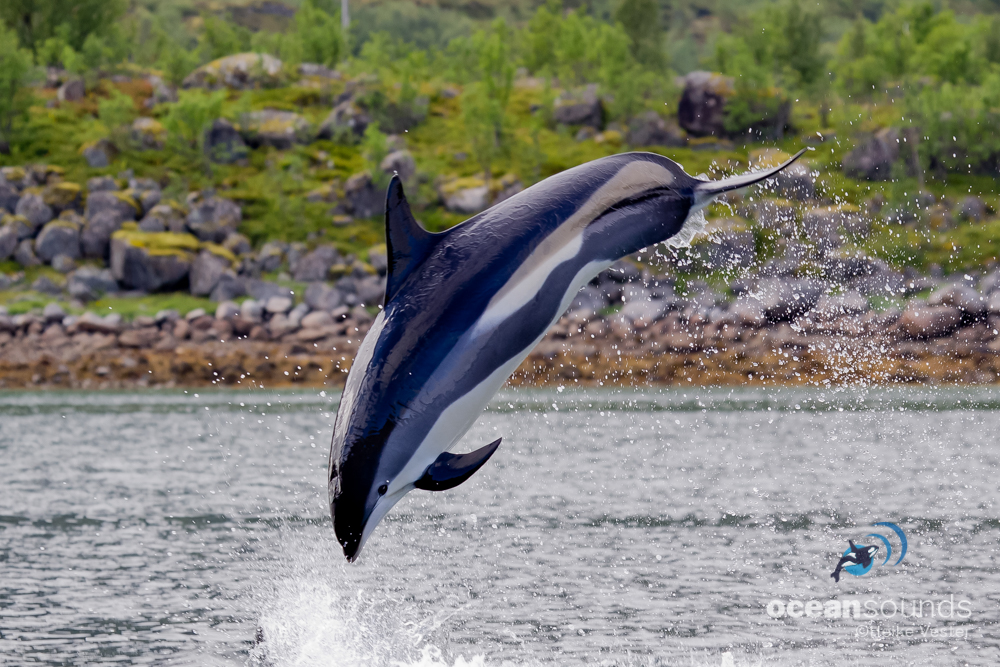
Atlantic white-sided dolphin are easily recognizable through its yellow stripe along its side. However if you find the other common species, the white beaked dolphins (“kvitnos”), we are equally interested, since it seems that they never overlap their areas.
People working on this project:
Dr. Heike Vester, whale researcher since 2003, Ocean Sounds
Ellyne Hamran, Master of Science Degree in Marine Ecology in 2014 at Nord University: Distribution and vocal behavior of Atlantic white-sided dolphins (Lagenorhynchus acutus) in northern Norway. Works now for Ocean Sounds
Prof. Jarle Nordeide, biologist Nord University
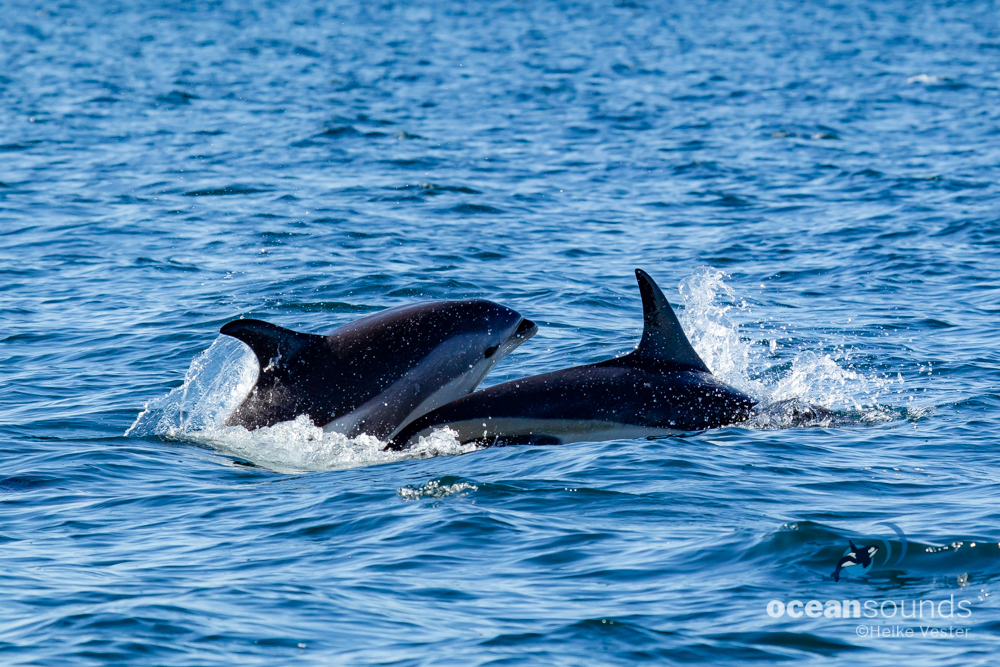
Identification: Look for a long tan colored stripe on the sides of the dolphin closer to the fluke. The eye appears to be outlined like eyeliner around it. Can be acrobatic jumping, sometimes in smaller groups of 6+ to larger pods of 100s.
Group formation: Social groups/fission fusion (size 30-500)
Size: males 2.8 m, females 2.5 m, calf 1.2 m
Weight: 180-235 kg
Age: males 22 yrs, females 27 yrs
Gestation: 11 months
Sexual maturity: males 7-11 yrs, females 6-12 yrs
Diet: Atlantic Herring (Clupea harengus), Atlantic Mackerel (Scomber scombrus), Atlantic Cod (Gadus morhua), Smelts (Osmeridae spp.), Sand Lances (Ammodytidae spp.), several types of squid (Teuthida spp), Silver Hake (Merluccius bilinearis), Red Hake (Urophycis chuss), and Cephalopods, mostly Long Fin Squid (Loligo pealeii)
Distribution: Endemic to the North Atlantic Ocean, cold temperate to subpolar waters from about 35°N in the west and the Brittany coast of France in the east, north to southern Greenland, Iceland, and southern Svalbard. They have been sighted year round in the deep waters in the North Sea. They move to northern latitudes during warmer months and closer to shore in the summer and offshore during the winter. They are oceanic dolphins located near the continental shelf, slope, canyon waters, and concentrate in areas of high seafloor relief, more densely in deeper areas and sometimes near the coast including fjords or inlets. Little is known about the northern limitations of their distribution.
Population: 150,000 – 300,000, of which 48,819 in the western north Atlantic
Conservation Status: Least Concern ver 3.1, Pop. trend: unknown
Whaling (Faroe Islands, eastern Canada, Greenland), bycatch, pelagic trawls in southwestern Ireland, gillnets, plastic pollution, pollution, man-made noise impacts (seismic surveys, military sonar), entanglement in fishing gear, overfishing.
Did you know that this species uses clicks for hunting and whistles for communication? Learn more interesting facts by pressing play.