Walrus
(Norsk: Hvalross)
Odobenus rosmarus
Population (Global estimation) : 300,000
Conservation Status : Vulnerable
A rare guest in Lofoten!
There used to be walrus colonies in Norway but they were driven to extinction. Nowadays only males migrate to the Norwegian coast for feeding during the summer months and single males can be seen on a rare occasion, whereas females and calves stay in colonies in the Arctic (Svalbard). In 15 years we have seen 3 male walruses in Lofoten, one of them was shot by the salmon aquaculture, even though walruses do not feed on salmon!
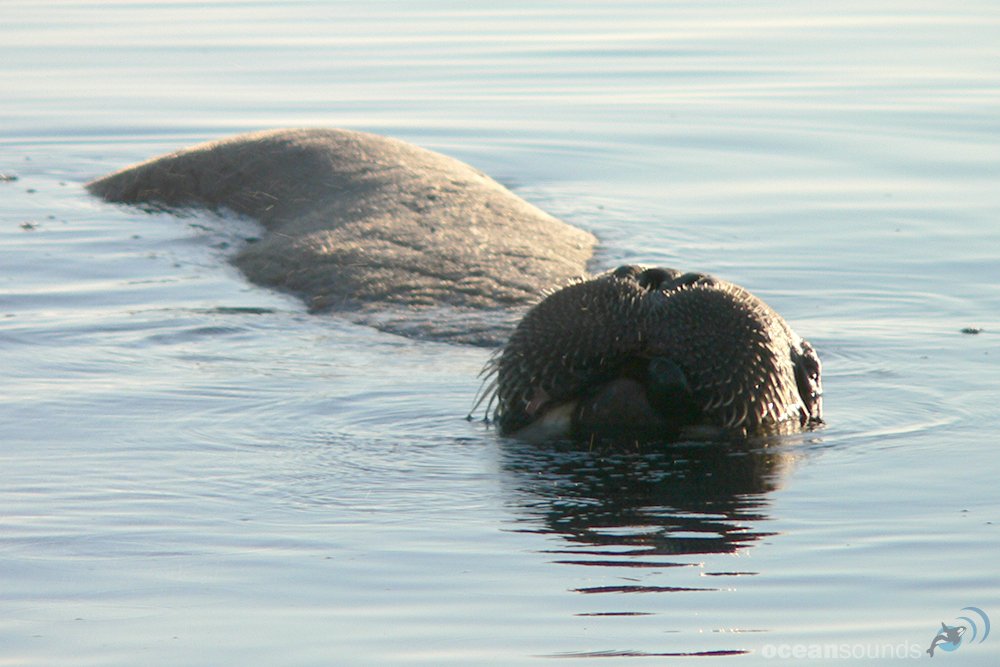
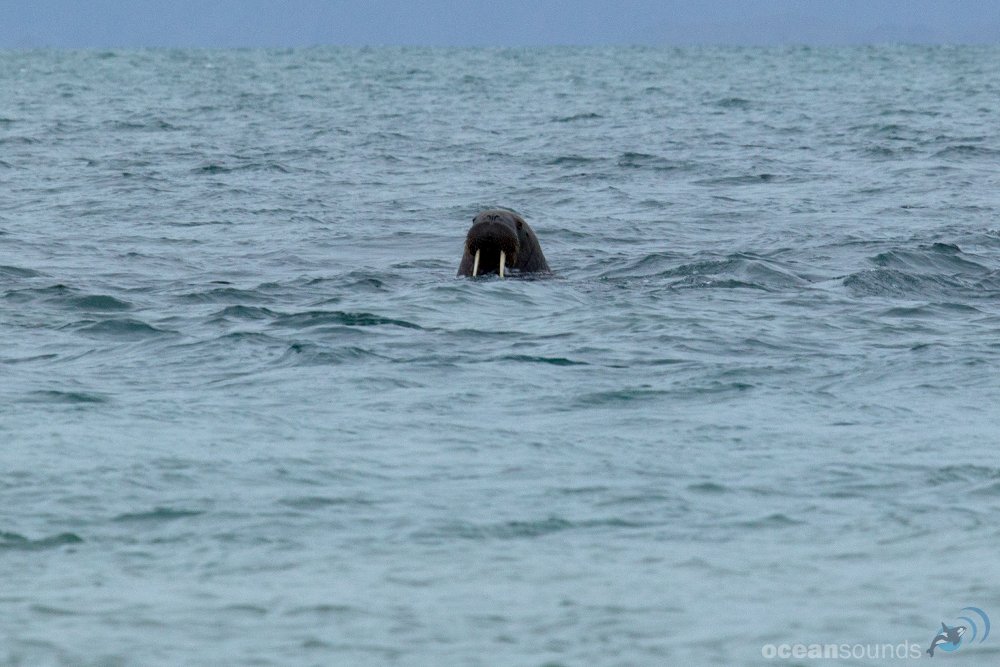
Identification: Cinnamon-brown color; Large, robust & sparsely haired; Dense, short, stiff whiskers on upper lip; long external tusks; male has massive chest, wart-like nodules on neck and chest
Group formation: Gregarious groups
Size: males 3.6 meters, females 3 meters, calf 1-1.2 meters
Weight: males 1,900 kilograms, females 1,200 kilograms, calf 45-75 kilograms (born April-June)
Age: 40 years
Sexual maturity: males 15 years, females 7-8 years
Gestation: 15-16 months (3 years in between births)
Weaning: 1-3 years
Diet: > 60 genera of marine organisms, including shrimp, crabs, tube worms, soft corals, tunicates, sea cucumbers, various mollusks, and even parts of other pinnipeds, but prefers benthic bivalve mollusks – clams.
Distribution: Circumpolar distribution with 2 subspecies: Atlantic & Pacific. The Atlantic Population lives in the Canadian Arctic, across Greenland, Svalbard, and the western part of Arctic Russia, within 8 sub-populations.
Population: ca 45,000 in the Atlantic; 5,500 in Svalbard-Frans Josef; 200,000-250,000 in the Pacific. Climate change and the resulting loss of sea ice are expected to cause a decline of approximately 30% over the next 45 years due to habitat degradation.
Conservation Status: Vulnerable (2024), Pop. trend: unknown
Seal hunting (native Arctic people), tourism, chemical and plastic pollution, oil and gas drilling, vessel traffic, entanglement in fishing gear, overfishing, global warming (melting of sea ice habitat).
Climate change and the resulting loss of sea ice are expected to cause a decline of approximately 30% over the next 45 years due to habitat degradation.