Grey seal
(Norsk:Havert, Gråsel, Havkobbe)
Halichoerus grypus
Population (Global) : 632,000
Conservation Status : Least Concern
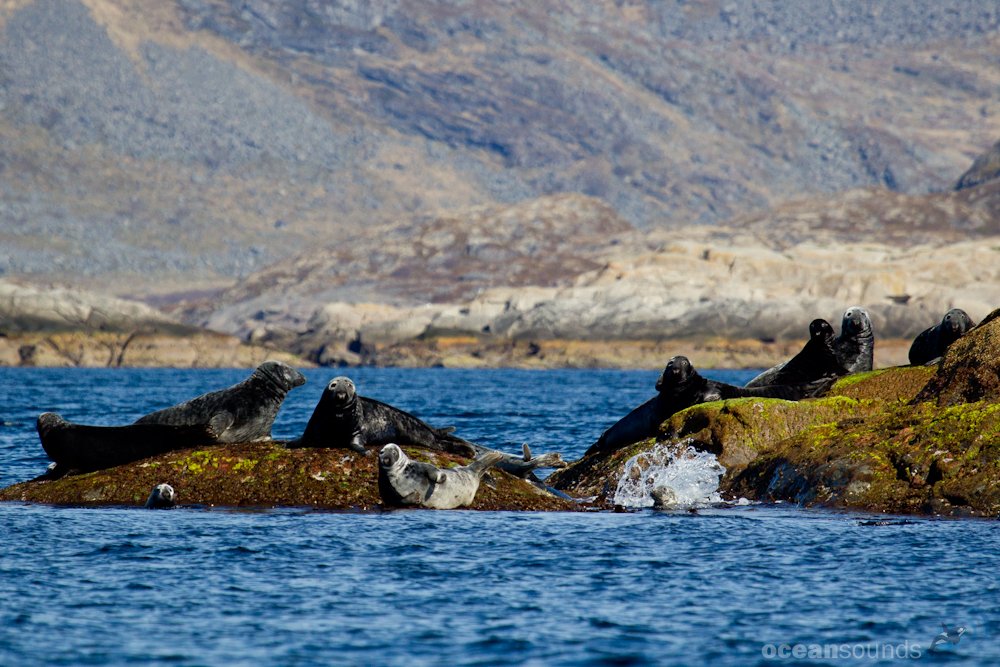
Active seal hunting in Norway and 100-200 seals killed in nets each year in Norway (IMR). small colonies along the Norwegian coast, from Rogaland to Finnmark on the outermost islands. In Lofoten only few gathering places during summer and breeding places in the winter, around Henningsvaer 5-10 grey seals gather every summer on a small island.
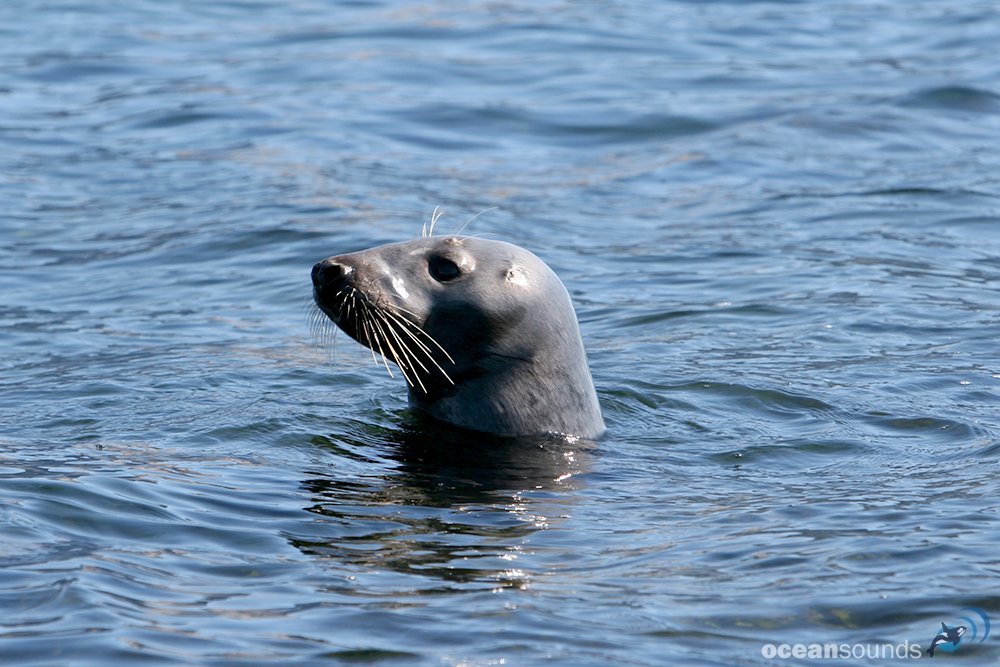
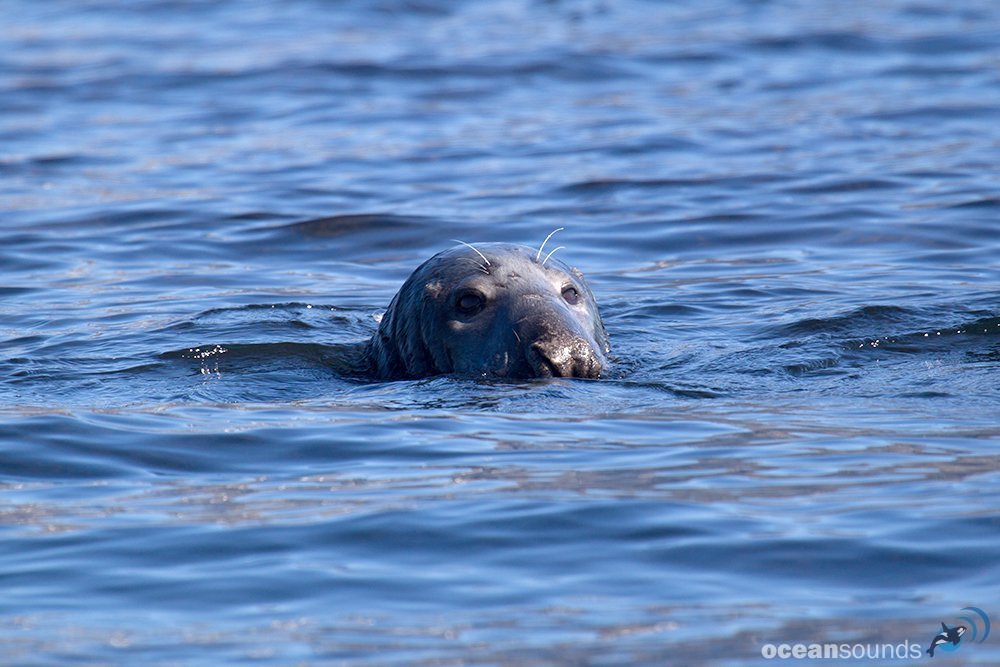
Identification: grey and brown fur, sometimes with a pattern of blotches (male dark with light splotches, female light with dark splotches); no ears visible; long muzzle; nostrils parallel; larger and darker than common seal, with flat or convex profile to its head
Group formation: Gregarious groups
Size: males 2.6 meters, females 2 meters, calf 90-110 centimeters
Weight: males 350 kilograms, females 200 kilograms, calf 13-18 kilograms
Age: 25-35 years
Gestation: 11 months
Weaning: 3-4 weeks
Sexual maturity: males 6 years, females 3-5 years
Diet: Generalist feeder, variety of fish and invertebrates
Distribution: 3 populations, North east and west Atlantic, with colonies along the coast of US and Canada, UK, Ireland, Iceland, Norway and the Baltic Sea.
Population: ca 632 000 globally, out of which 316,000 are considered mature individuals
Conservation Status: Least Concern (2016), Vulnerable in Iceland (2018). trend: increasing
Threats: seal hunting (Norway, Sweden, Finland), chemical and plastic pollution, entanglement in fishing gear, aquaculture, bycatch, overfishing.