Northern Fin whale
(Norsk: Finhval)
Balaenoptera physalus
Population (global) : 100,000 – 190,000
Conservation Status : Vulnerable
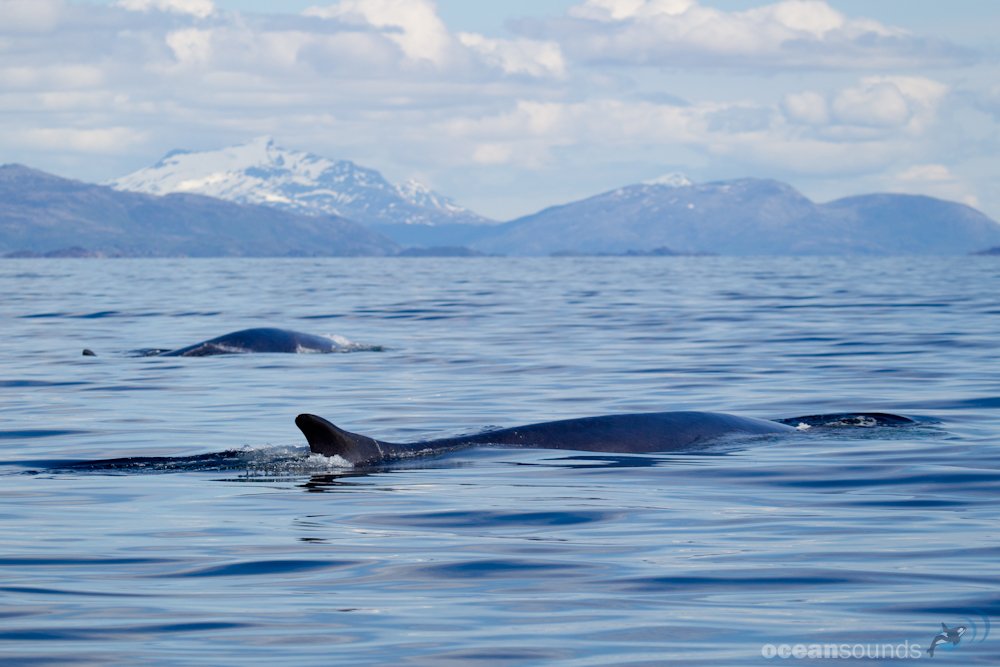
The northern hemisphere population migrates yearly between equatorial regions (e.g. Azores) and the Barents Sea. They arrive at the coast of northern Norway in June-July and leave after the herring feast in February. In the Vestfjord, fin whales are seen during the months June-September either solitary, mother calf pairs or in groups of more than 15 individuals.
Group formation: Solitary-gregarious (2-7 loose, feeding groups > 100)
Size (Northern Hemisphere): males 18-22, females 20-23m, calf 6.5m
Weight: 40-50 tons, calf 1.7 tons
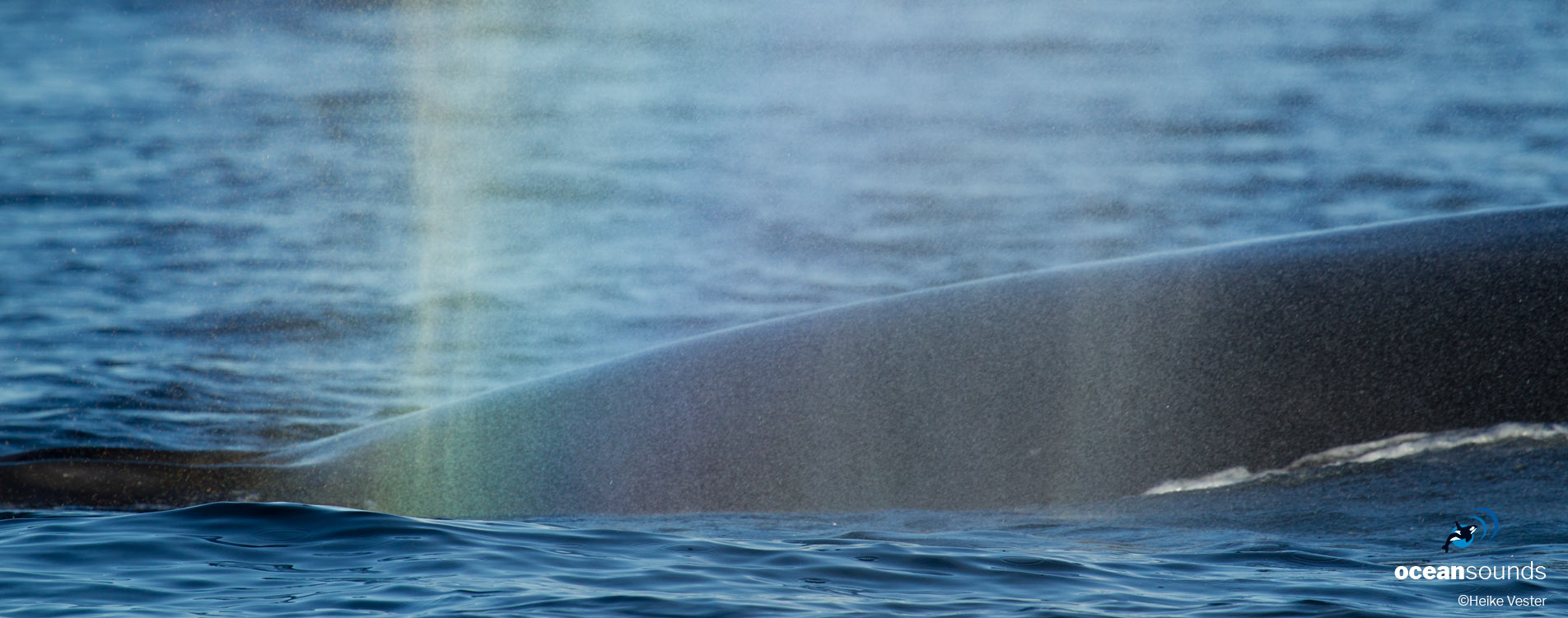
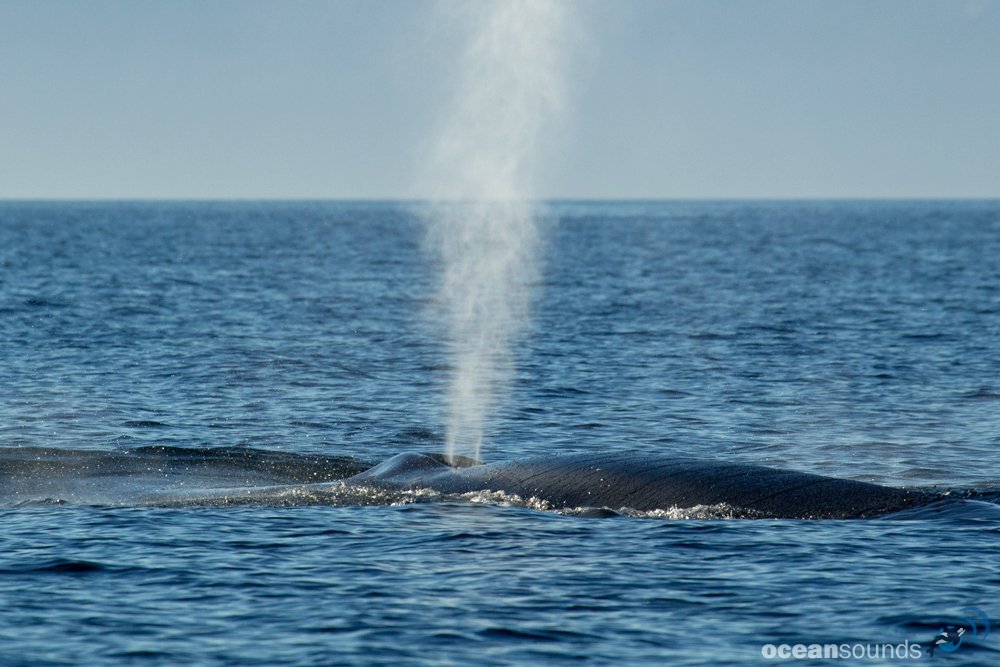
Spout: up to 10m, narrow column
Age: 80-114 yrs
Sexual maturity: 5-8 yrs
Physical maturity: ca. 25 yrs
Gestation: 11-11.5 months, 2-3 yrs between births
Weaning: 6-7 months
Diet: mainly krill, copepods, small schooling fish (including herring, mackerel, cod, pollock, capelin, sardines, sand lance, blue whiting, and small squid.
Distribution: Northern and Southern hemisphere sub-species, cosmopolitan from tropic to Polar Regions
Population size: global ca. 100.000-190.000, heavily exploited, about 80,000 in the North Atlantic
Conservation Status:
Vulnerable (2018) trend: unknown
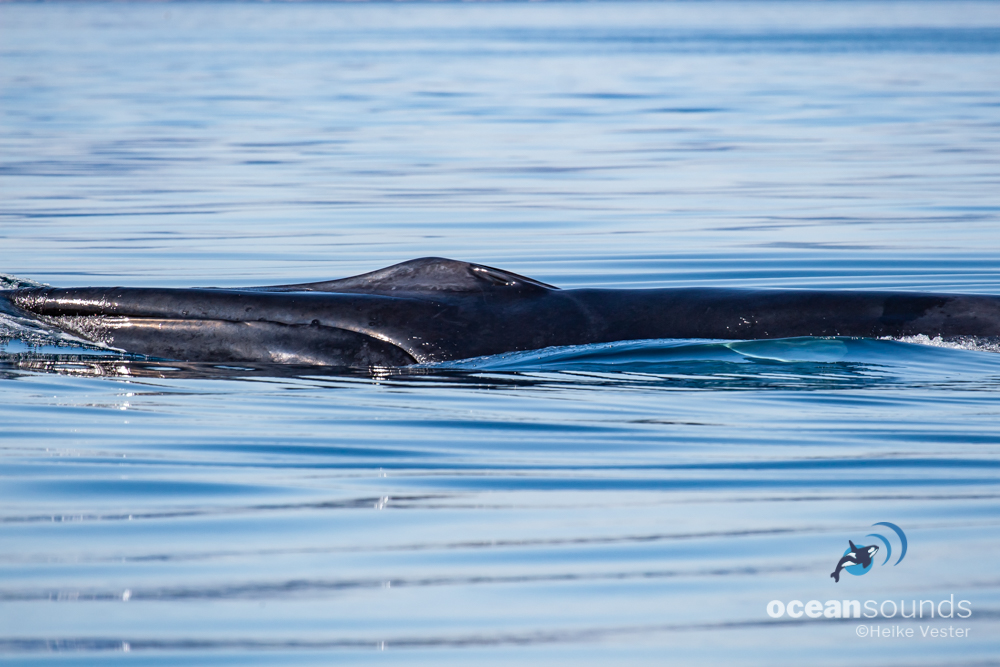
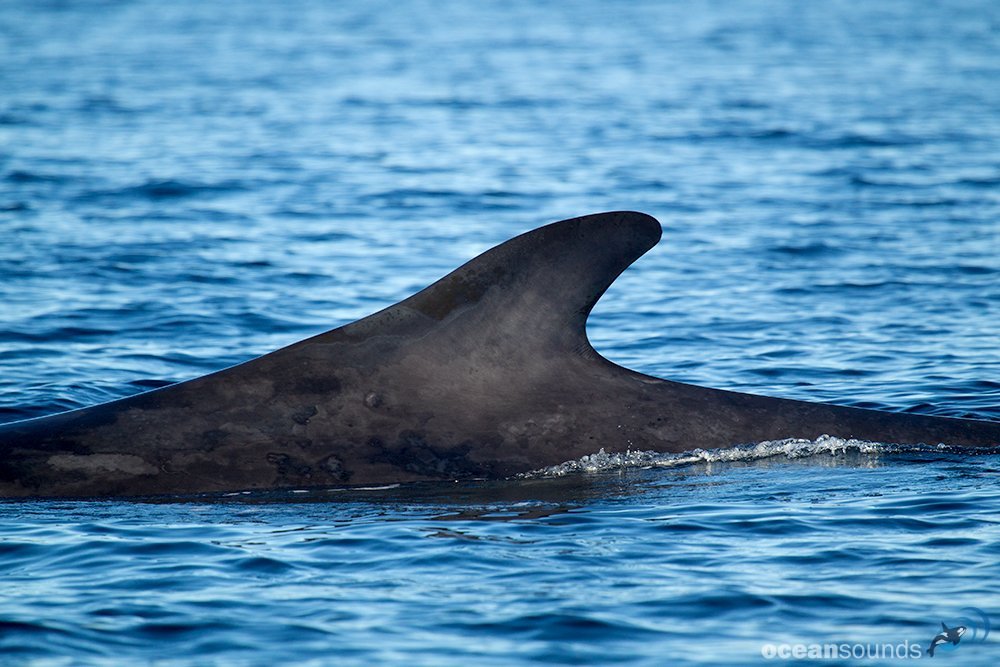
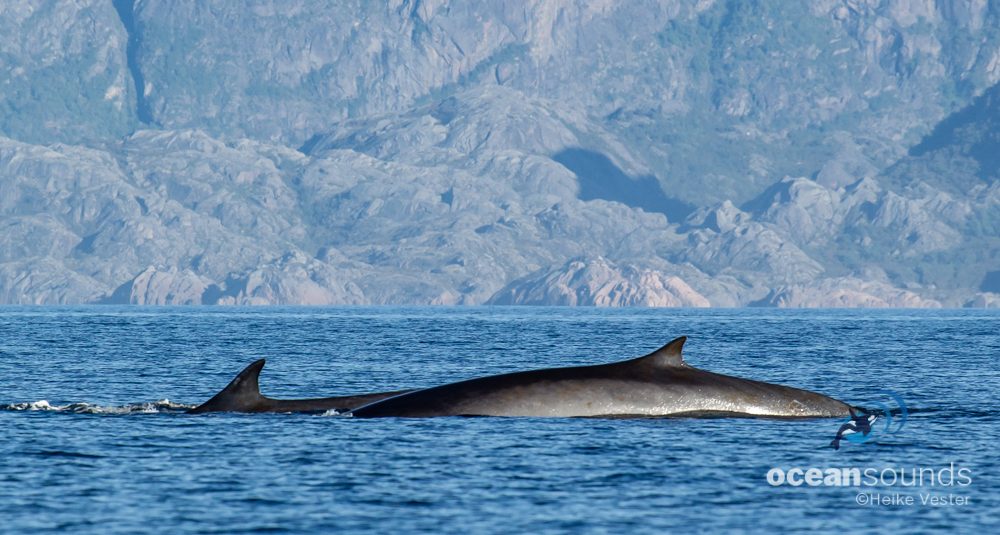
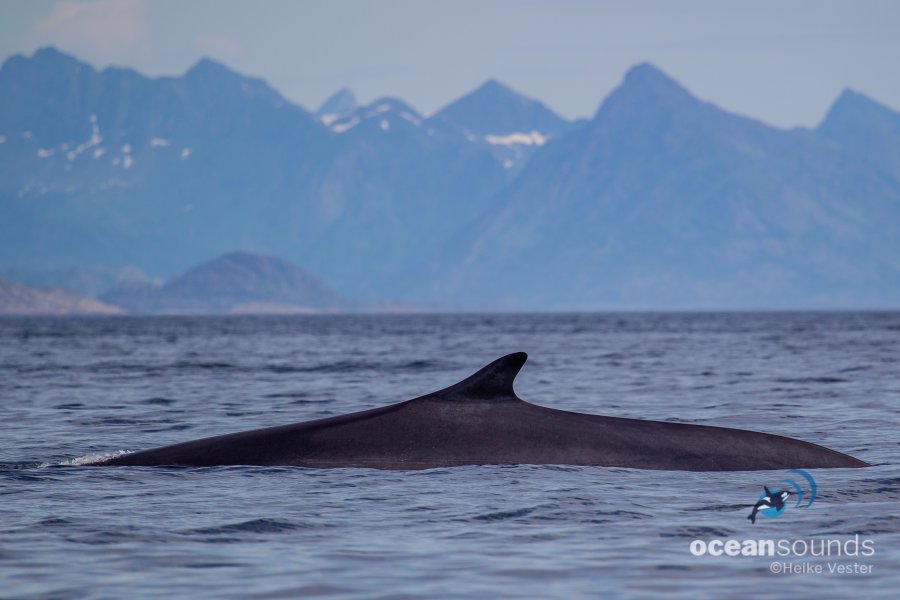
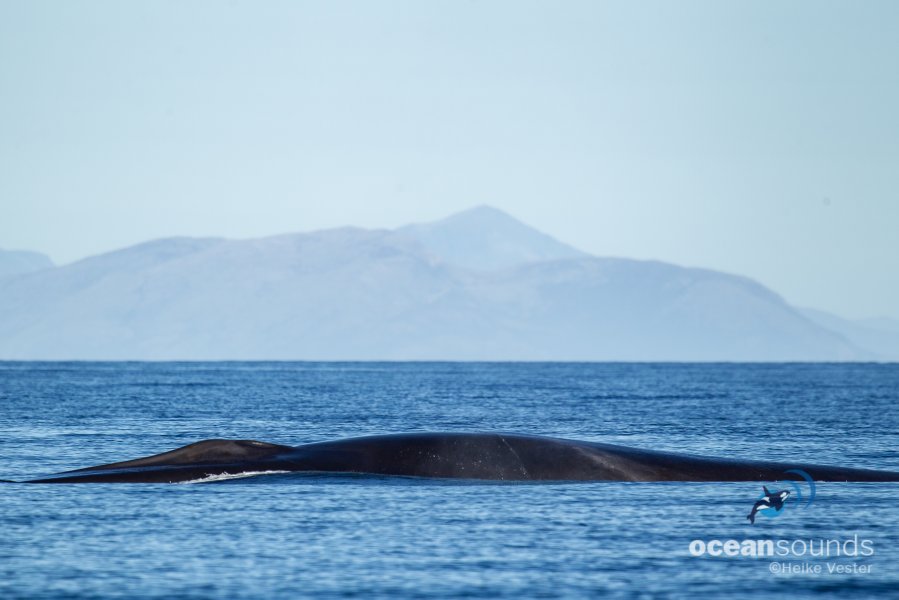
Identification: Second largest whale, large grey body 18-23 m long, V-shaped slender head
Here you can listen to low frequency pulses (20 Hz) made by a Fin whale to communicate over vast distances. Males create low frequency mating calls to attract a mate.