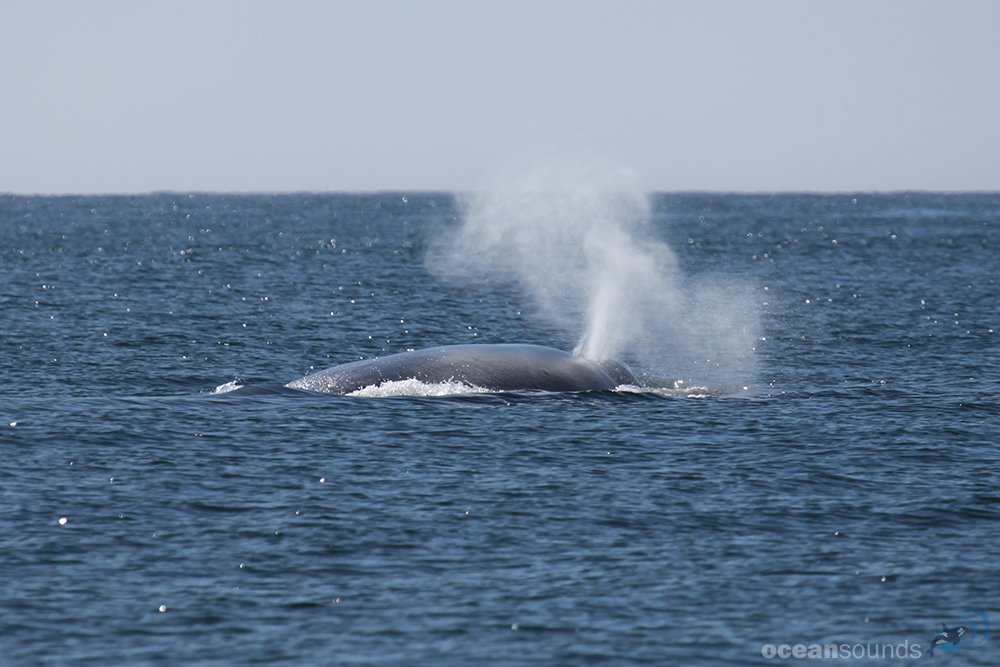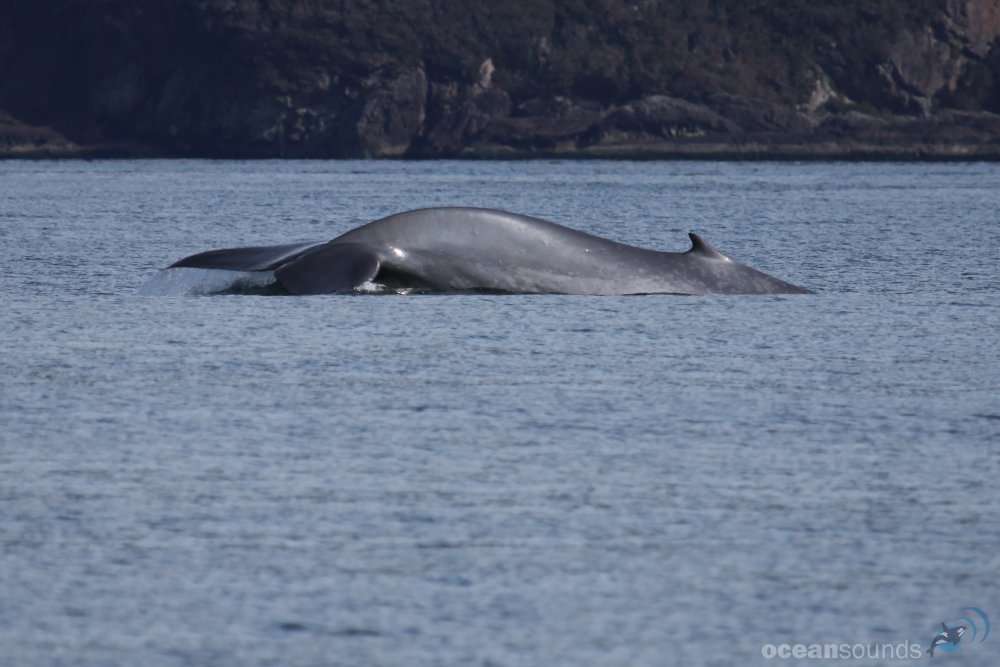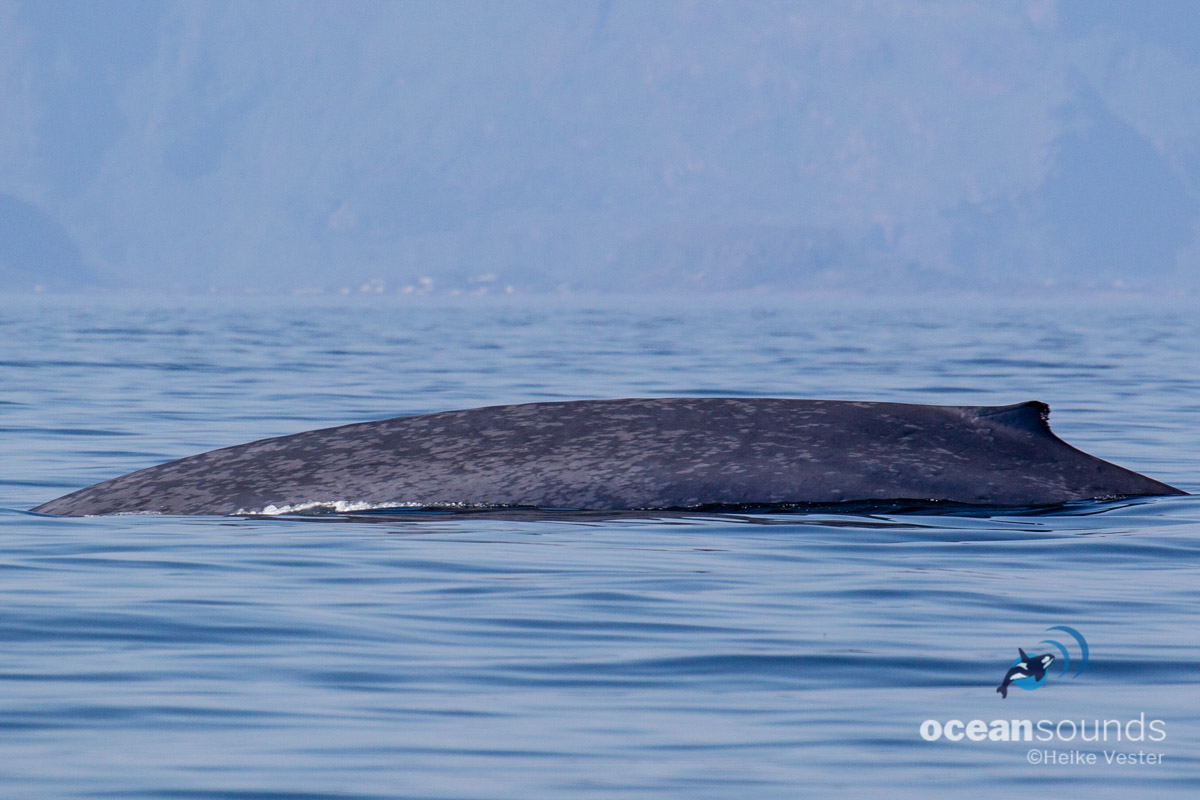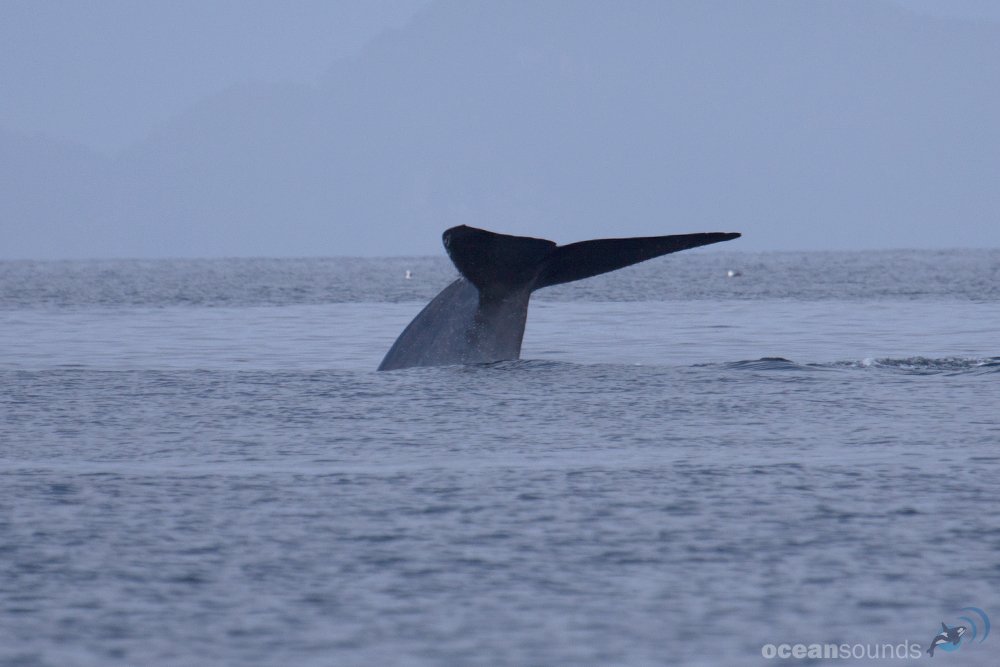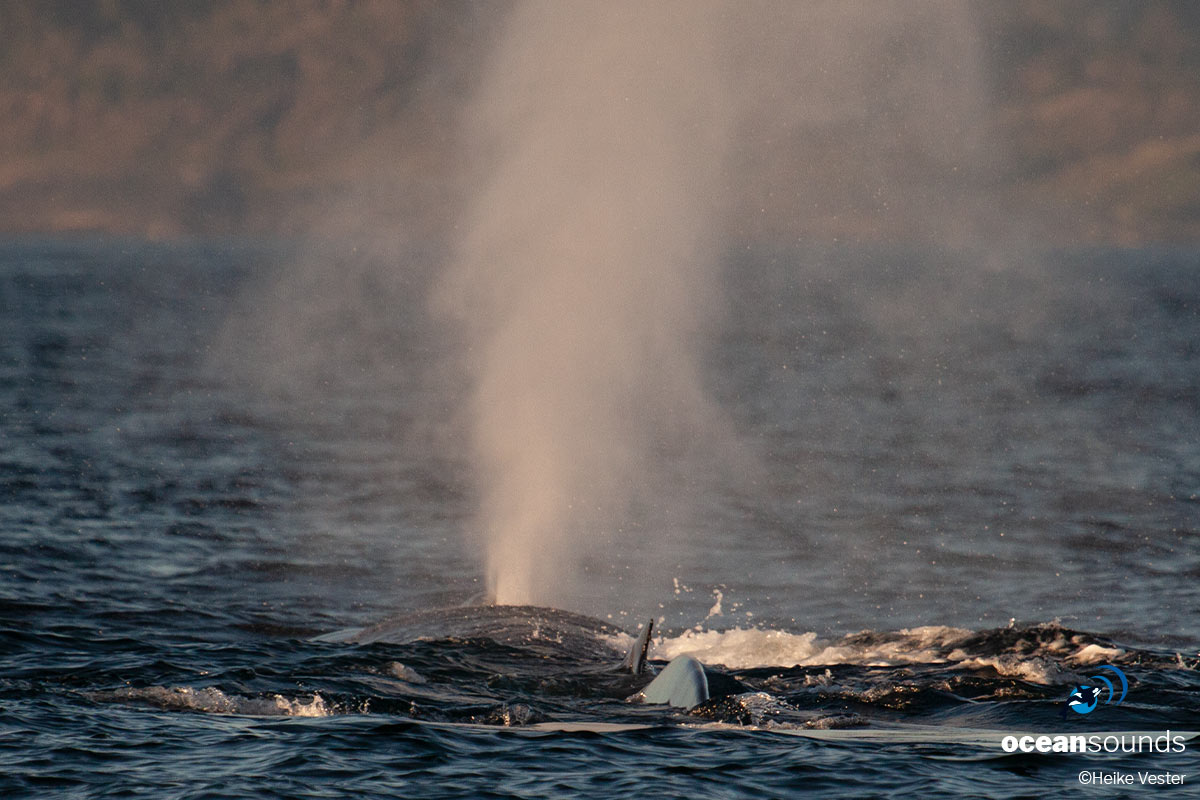
Blue Whale
(Norsk: Blåhval)
Balaenoptera musculus
Population (global) : 10,000 – 25,000
Conservation Status : Vulnerable
In Norway sightings are rare, but they can be seen along the Norwegian coast, Jan Mayen, and Svalbard during migrations to their feeding grounds in the Arctic. They are generally seasonal visitors to the Northeast Atlantic Arctic, arriving at high-latitude feeding grounds in late spring or early summer and migrating to more temperate areas in autumn. In the North Atlantic, they are most frequently observed around west and north Iceland.
Identification: Largest whale up to 33m! More grey than blue looking.
Group formation: Solitary (mother-calf pair)
Size: males 29m, females 33m, calf 7m
Weight: males 150 tons, females 180 tons, calf 3 tons
Spout Blow: up to 12m column
Age: 65-110 yrs
Sexual maturity: unknown ca 5-15yrs
Physical maturity: ca 20 yrs
Gestation: 10-12 months, with 2-3 yrs in between
Weaning: 6-8 months
Diet: Krill (euphausiids) and copepods (Temora longicornis).
Distribution: Worldwide in all Oceans, blue whales in the northern hemisphere are smaller than in the southern hemisphere, north-south migrations
Chile: seen along the coast of Chile (feeding grounds in the Gulf of Corcovado) on their migrations to their breeding grounds at the equator
Population size: global 10.000-25.000, heavily exploited (70-90% reduced)
Conservation Status: Endangered A1abd ver 3.1, Pop. trend: increasing
Vessel collisions, chemical and plastic pollution, man-made noise impacts (shipping, seismic surveys, military sonar), entanglement in fishing gear, overfishing, coastal development.
Listen to the mating call of a male Blue whale. Low frequency calls (rut calls, 10-40 Hz) are heard during the breeding season to attract a mate. They also produce slow 20 Hz pulses for long-distance communication. These powerful sounds can travel hundreds of kilometers and are mostly below human hearing, but easily detected by other whales.