
Stranded whale prepared for exhibition
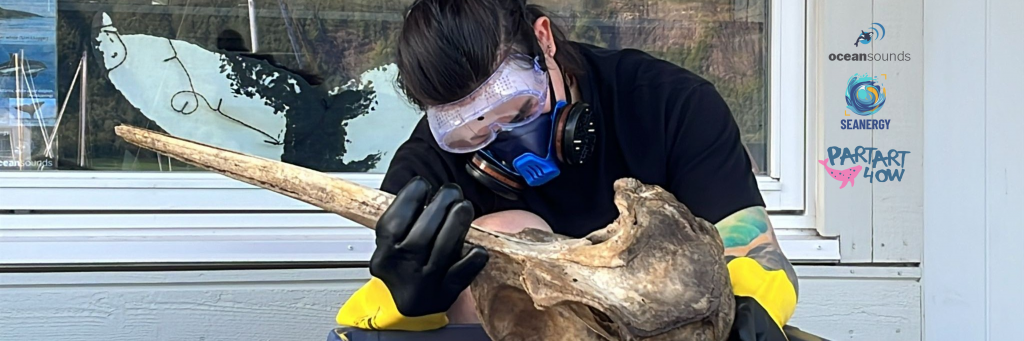
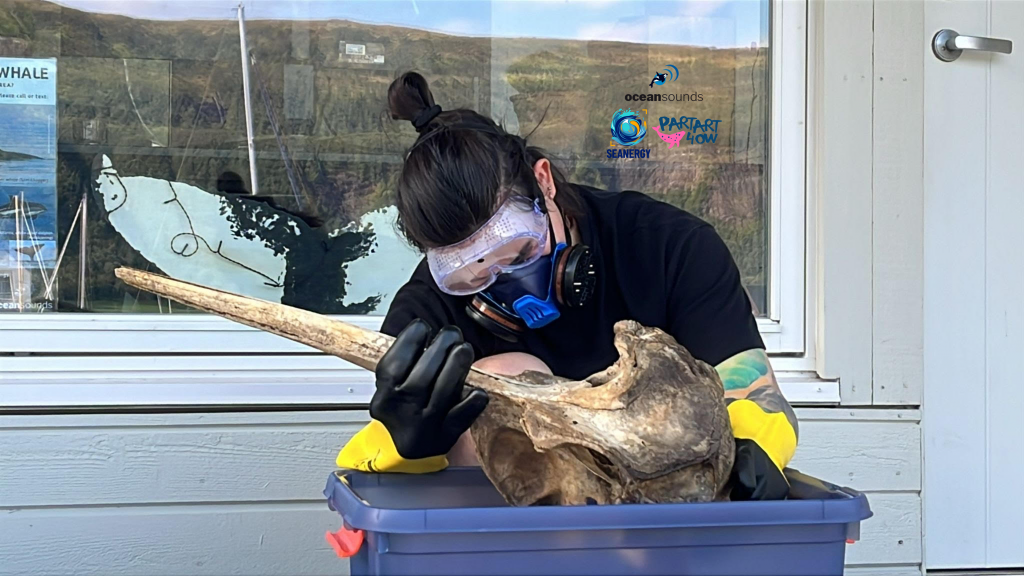
Sveinung is currently working on preparing the skeleton of a Sowerby’s beaked whale for our Sea of Sounds event. Interested to read about the details behind the find – see his story below.
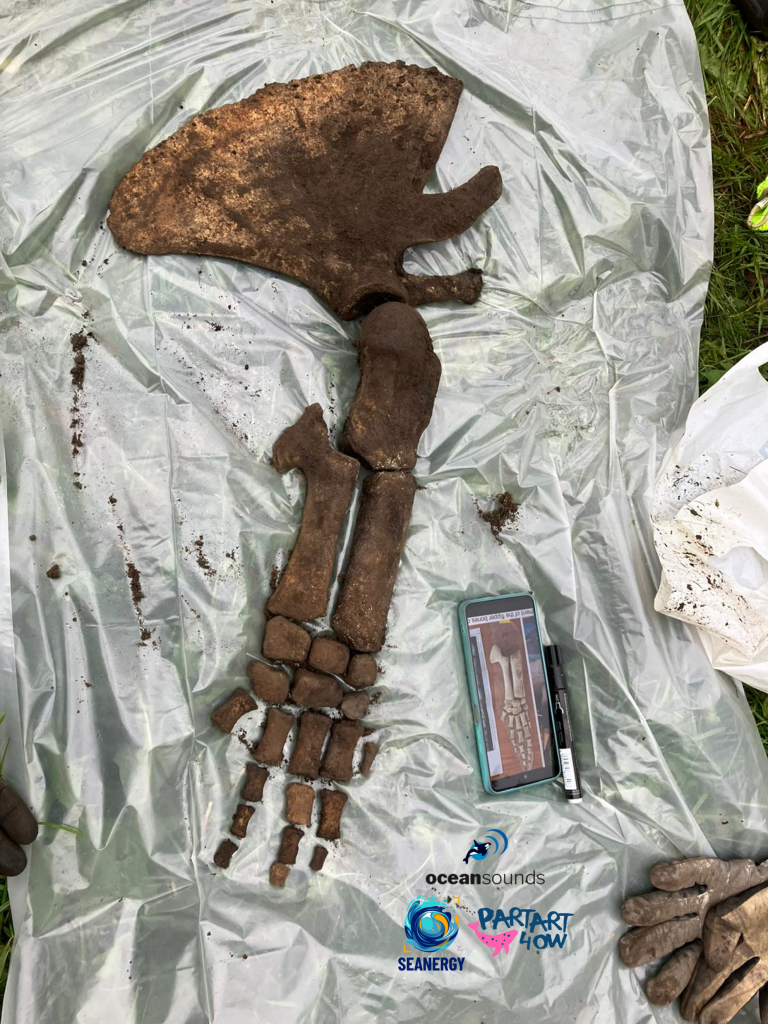
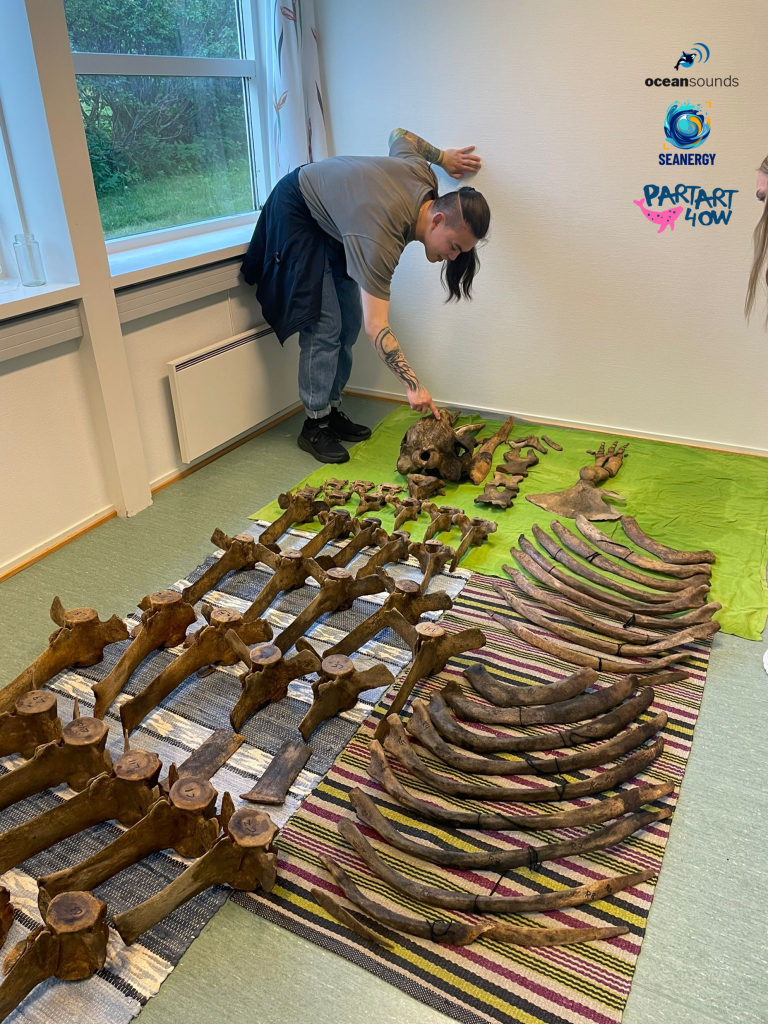
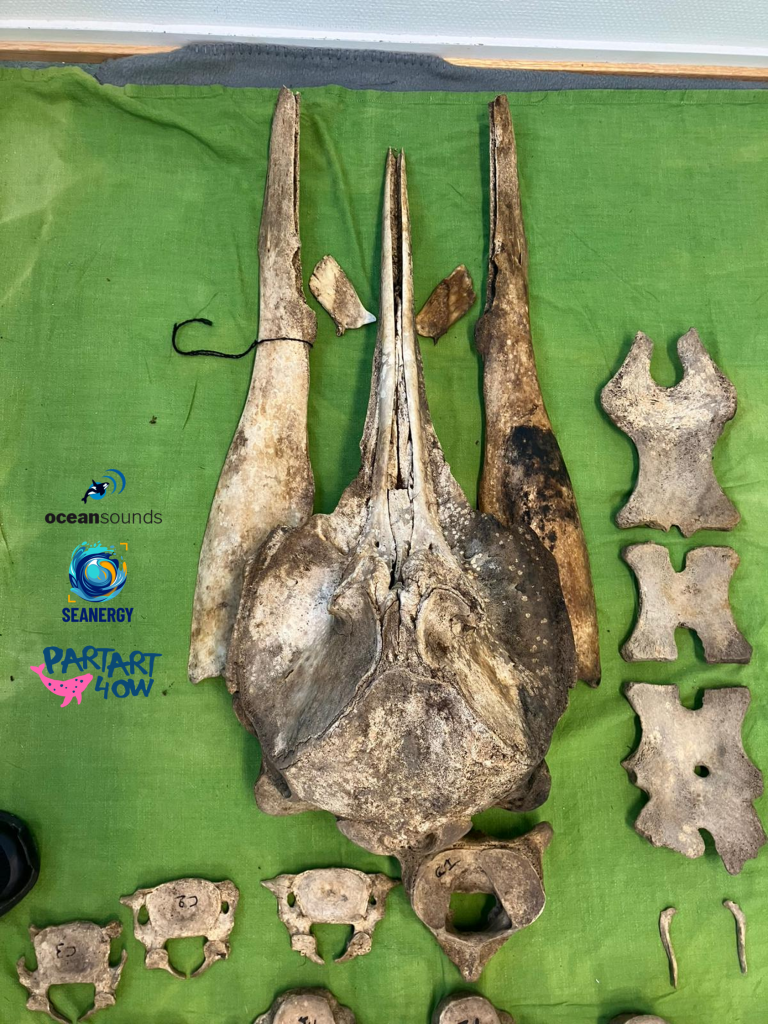
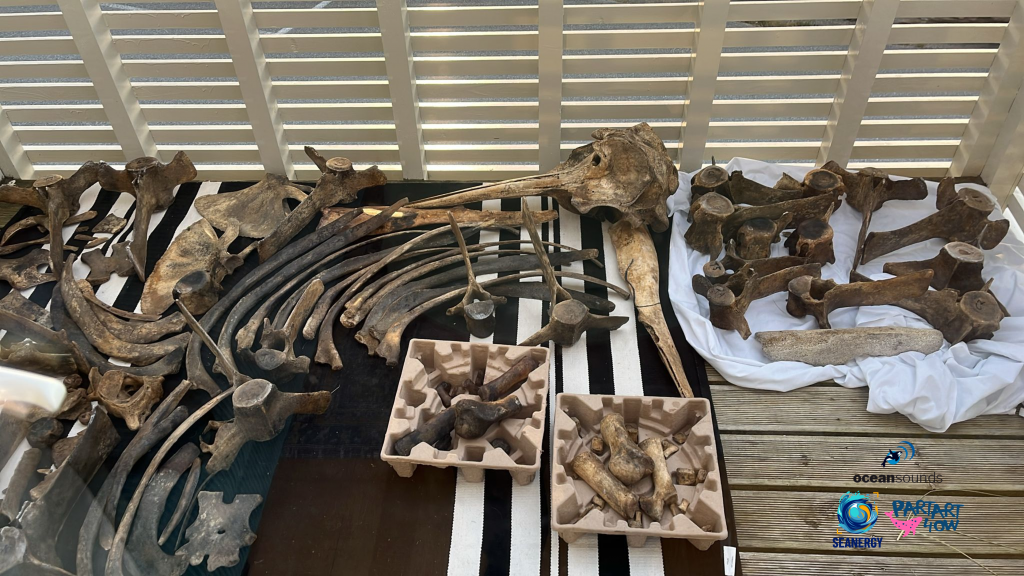
The skeleton is from a sub-adult male measuring 4.7 meters in length. It stranded on Sandhornøya, Bodø, in 2016. A post-mortem was performed, before the whale was transported to Valnesfjord, Fauske, where it was buried to decompose. Fast forward to August 2024, during a rainy day, an excavation team of four people with a lot of gear started checking the site. The team found fragile bones that had been weather-torn and frostbitten over the course of the last years, so they were really careful not to break any. After the bones were collected, they were transported to Bodø for cleaning and drying at the Ocean Sounds Headquarters. The bones were also counted and assembled. What’s hard about this particular species of whale, due to the elusive nature and few observations of these animals, is that the exact skeletal anatomy remains largely unknown. It’s hard to say if all bones are present, or if any are missing. The drying process takes time, and due to the fragility of the bones, they were not whitened. Instead, in August 2025, they were fixed with epoxy which stabilizes the bones, preparing them for exhibition and further wear. Next step is getting them to the venue!
~ Sveinung Hoset




A finding of a stranded whale always begs the question – what happened?
The reason for this stranding is unfortunately unknown, however, beaked whales are among the deepest-diving cetaceans and rely heavily on sound for navigation and feeding. Because of this, they are particularly sensitive to underwater noise such as military sonar and seismic surveys.
Such sounds have been linked to strandings of several whale species around the world. Studies have found evidence of inner ear damage, and signs consistent with decompression stress following exposure to loud noise. In extreme cases the soundwaves can also cause internal bleeding. Interestingly, seismic activity was recorded in the area during the time of this stranding, and the whale was showing signs of distress before stranding. It was observed lifting its head out of the water multiple times – something that’s been seen in other whales exposed to loud noise – possibly a sign of extreme pain.
We in Ocean Sounds study the effects of noise pollution on whales, and with Sea of Sounds we let people experience the effect of noise in a whales perspective. The skeleton will be exhibited during our event in Bodø in February. Join us there to learn more about how sound connect life beneath the surface, and the growing impacts of underwater noise pollution.