Beluga
(Norsk: Hvitval)
Delphinapterus leucas
Population (Global) : likely exceeding 200,000
Conservation Status : Least Concern (LC, IUCN 2017)
Beluga sightings around mainland Norway are rare and noteworthy events, not regular occurrences. in Norwegian waters belugas are normally found around Svalbard or deep in the Barents Sea. The Norwegian mainland coast, including Lofoten, is far outside their typical range. Seeing one there is considered highly unusual.
Research suggest belugas may venture far from their normal range due to disorientation, search for food (such as herring or salmon), or natural exploratory behavior. Separated individuals from pods may wander significant distances.
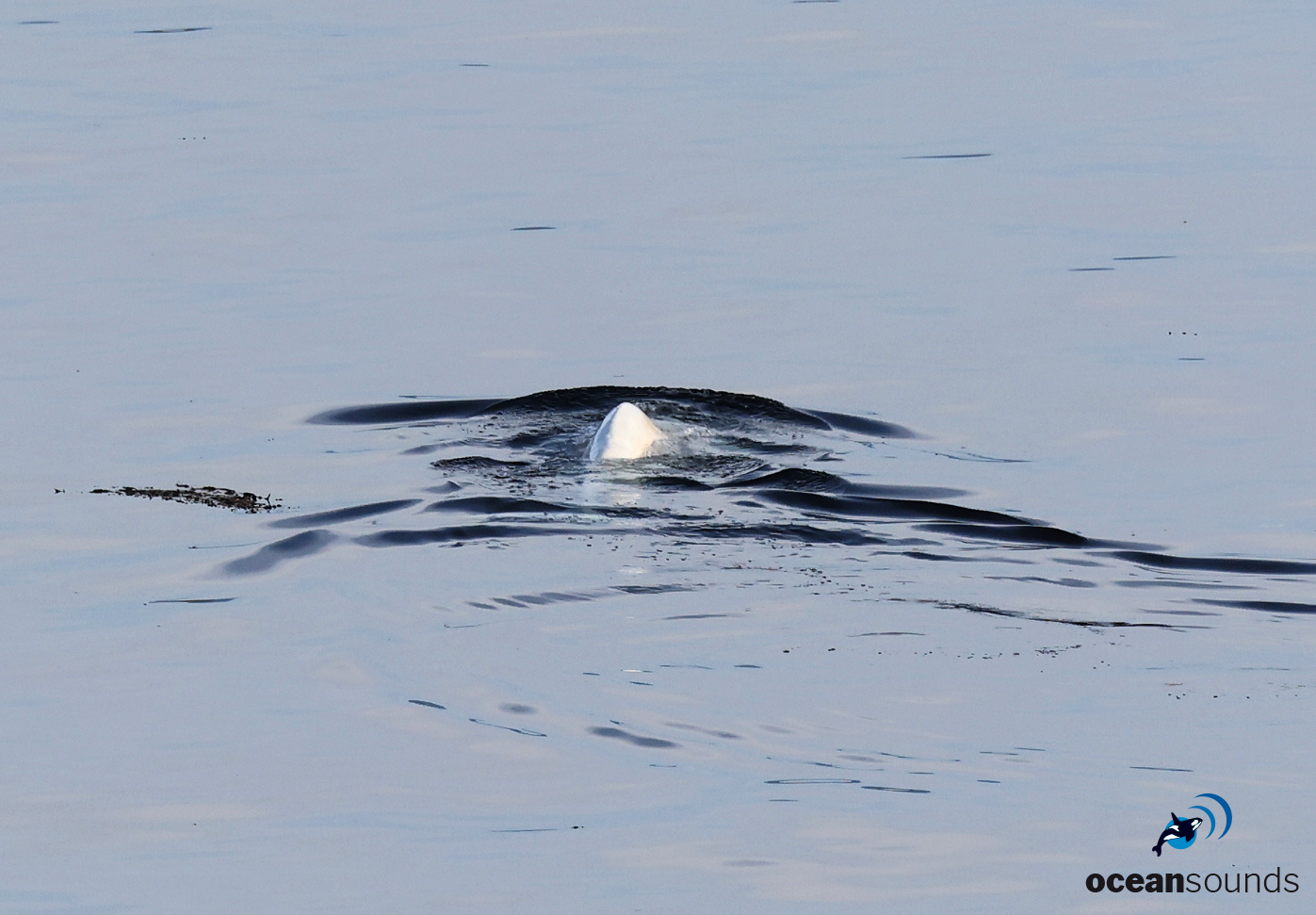
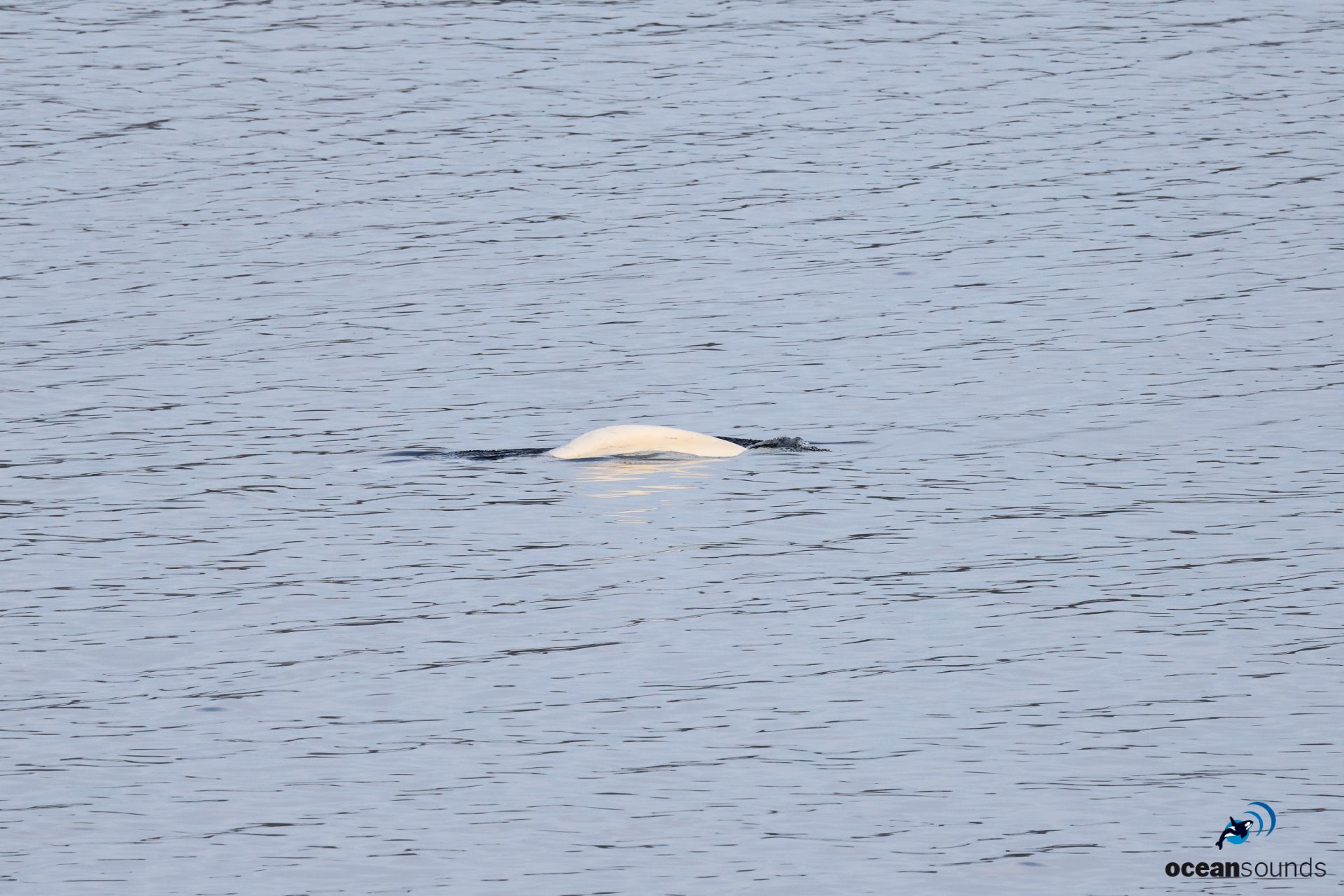
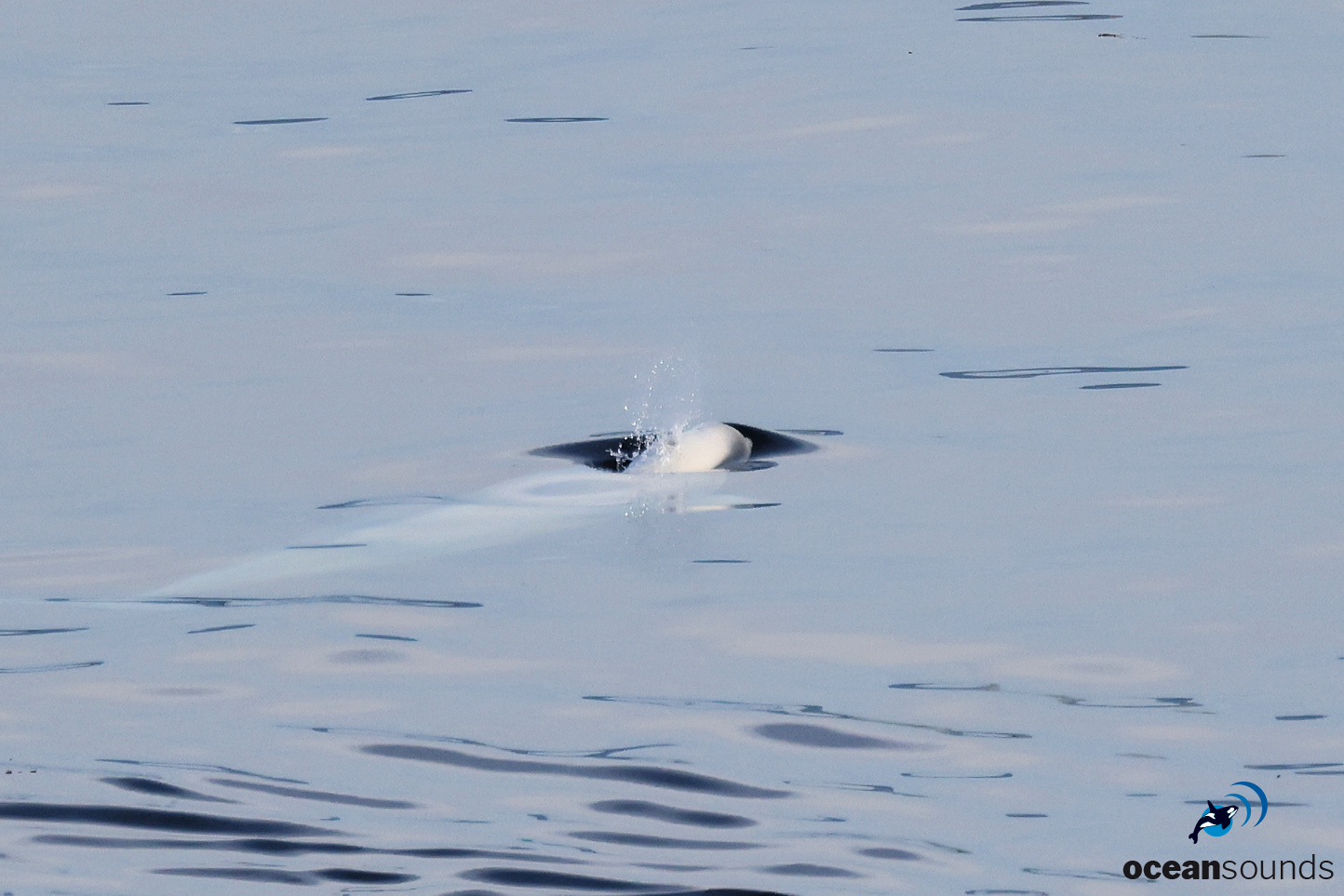
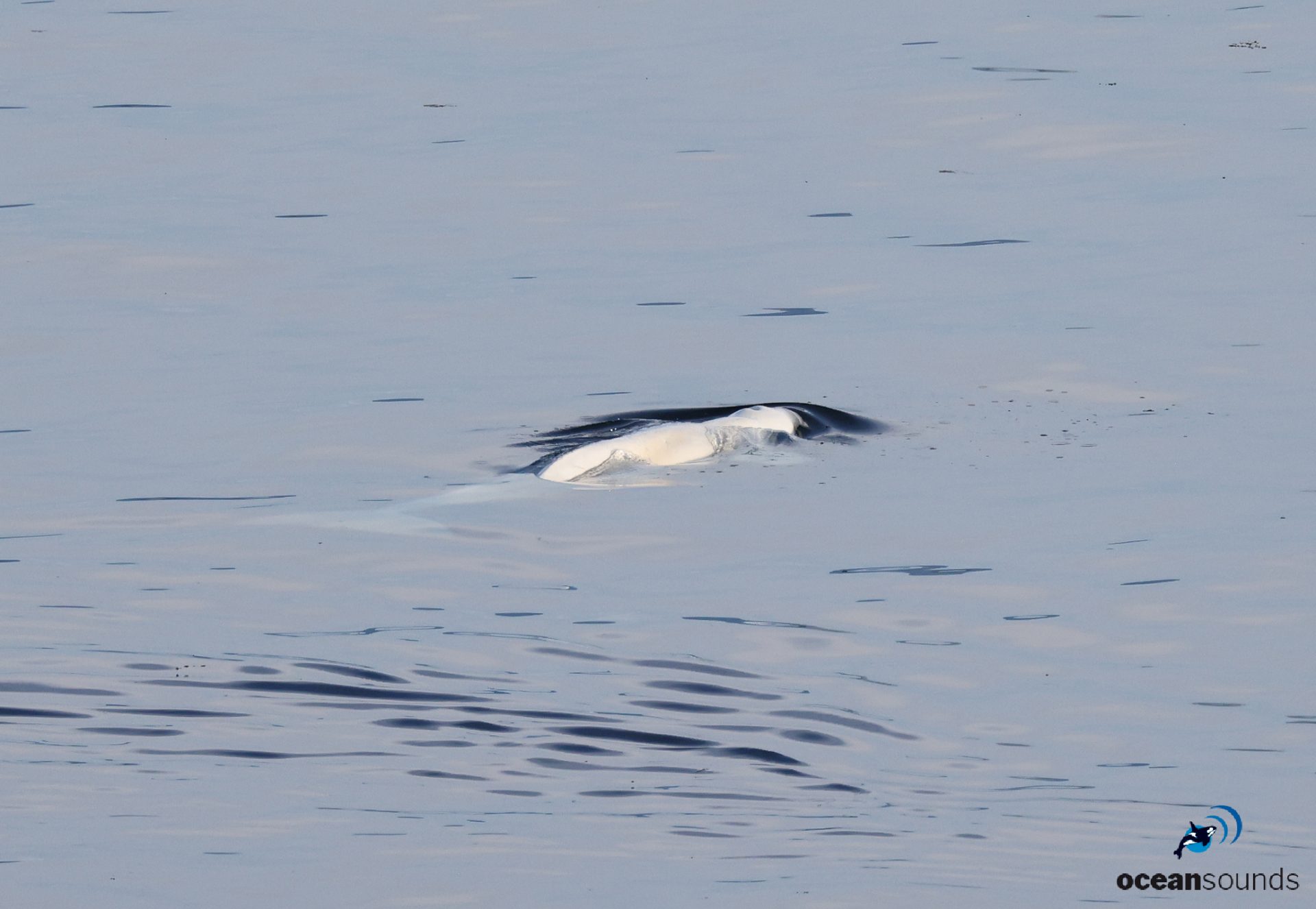
Our field team were lucky enough to encounter a beluga in Bodø area on June 21st 2026 with the help from land observers – a rare interaction indeed. Click the video tab below to watch the encounter! Recently a beluga was also spotted in Drammenselva (60 km west of Oslo), far south of its normal habitat. The Norwegian Polar Institute confirmed it appeared healthy but its presence in southern Scandinavian waters is uncommon.
ID: Belugas are a toothed whale with 32-40 teeth, they appear bright white when adult while calves are dark grey-brown, turning white by age 8-12. They have a bulbous and deformable melon on forehead which is used to focus echolocation. They don’t have a dorsal fin (dorsal ridge instead), which is an adaptation for swimming under ice. Broad paddle-shaped flippers with upward-curving tips, a stout body and a thick blubber layer (up to 15 cm).
Group formation: Beluga whales are highly social and their social structure is highly flexible. Group sizes range from pairs or small pods of 2-10 to massive aggregations exceeding 2,000 individuals. Pods may consist of a single sex and age class or include mixed ages and sexes. Associations between individuals vary from short-term encounters to lasting bonds maintained over several years. Beluga groups are also thought to centre on females with calves of various ages, forming matrilineal units of closely related individuals, similar to the social structure seen in killer whales and some other odontocetes.
Size: Males 3.5-5.5 m, females 3.0-4.1 m, calf 1.5 m at birth
Weight: males 1,100-1,600 kg (up to 1,900 kg), females 700-1,200 kg, calf 62-89 kg at birth
Spout: Inconspicuous, approximately 1 metre high, single blowhole
Diving range: Typically shallow (10-50 m), regularly 300-600 m, maximum recorded >1,000 m for up to 25 minutes
Age: Up to 60-90 years (NOAA estimates up to 90; some sources cite 40-60 in wild)
Sexual maturity: Females 6-14 years (typically between 8-10), males reach sexual maturity at a slightly older age
Gestation and birth: 14-15 months (up to 475 days). Females give birth every 2-3 years and remain reproductively active well into old age. Births occur in summer in warm, shallow waters such as tidal flats and estuaries, where newborns benefit from temperatures that compensate for their thin blubber layer.
Weaning: 12-24 months
Diet: Arctic and sub-Arctic fish (Arctic cod, capelin, herring, salmon, smelt, flatfish, sculpin), invertebrates (shrimp, crabs, mollusks, squid, amphipods), the diet varies regionally and seasonally
Distribution: Circumpolar Arctic and sub-Arctic; 22 management units/populations across Russia, Norway (Svalbard), Greenland, Canada, and Alaska. Some populations are migratory (following ice edges), others year-round resident. Some venture into river estuaries and even 1,000 km inland. Migration routes are passed down from mother to calf.
Population size: 150,000-200,000 globally across 22 stocks; largest populations: Western Hudson Bay (~55,000), Eastern Beaufort Sea (~39,300), Eastern Canadian Arctic (~21,400), Eastern Chukchi Sea (~20,700)
Conservation Status: IUCN Red List Least Concern (2017) at species level, with a global population exceeding 200,000. However, several subpopulations are critically depleted: Cook Inlet (Critically Endangered, <300), Eastern Hudson Bay (Critically Endangered, ~2,900-3,200), St. Lawrence Estuary (Endangered, ~900), Cumberland Sound (Threatened, ~1,200). Two stocks (Ungava Bay, southwest Greenland) are considered extirpated.
Climate change is the primary threat: sea ice loss exposes belugas to killer whale predation, disrupts the ice-algae food base, and can trap whales under ice. Warming also opens Arctic waters to shipping, oil and gas exploration, and industrial activity, generating noise that masks beluga echolocation and communication. Chemical contaminants such as mercury and organohalogens accumulate in blubber, impairing immune and reproductive function. Several populations remain depleted from historical and ongoing harvest: Cook Inlet declined 50% in the 1990s from subsistence hunting and has not recovered, and management of subsistence harvest for eastern Canadian stocks remains a challenge. Prey limitations from commercial fisheries and shifting species distributions under warming add further pressure.
On June 21st 2026 our field team were lucky enough to encounter a Beluga in the Bodø area, Ellyne walked along the shore and recorded this video – a rare and incredible event!
We only got to see them due to the amazing work of our land observers. We therefore would like to give a big thank you to Anders Dannesboe Larsen, Henry Güthenke, and Riccardo Comelli for reaching out when they saw this incredible animal!
Belugas do not have a dorsal fin, making them difficult to spot from the RIB. Luckily for us, we had a great team consisting of Ellyne and Riccardo, who guided us to the beluga.